Are you thinking about getting a munchkin cat? Check out this Munchkin Cat Guide: Health, Genetics, and What Vets Want You to Know
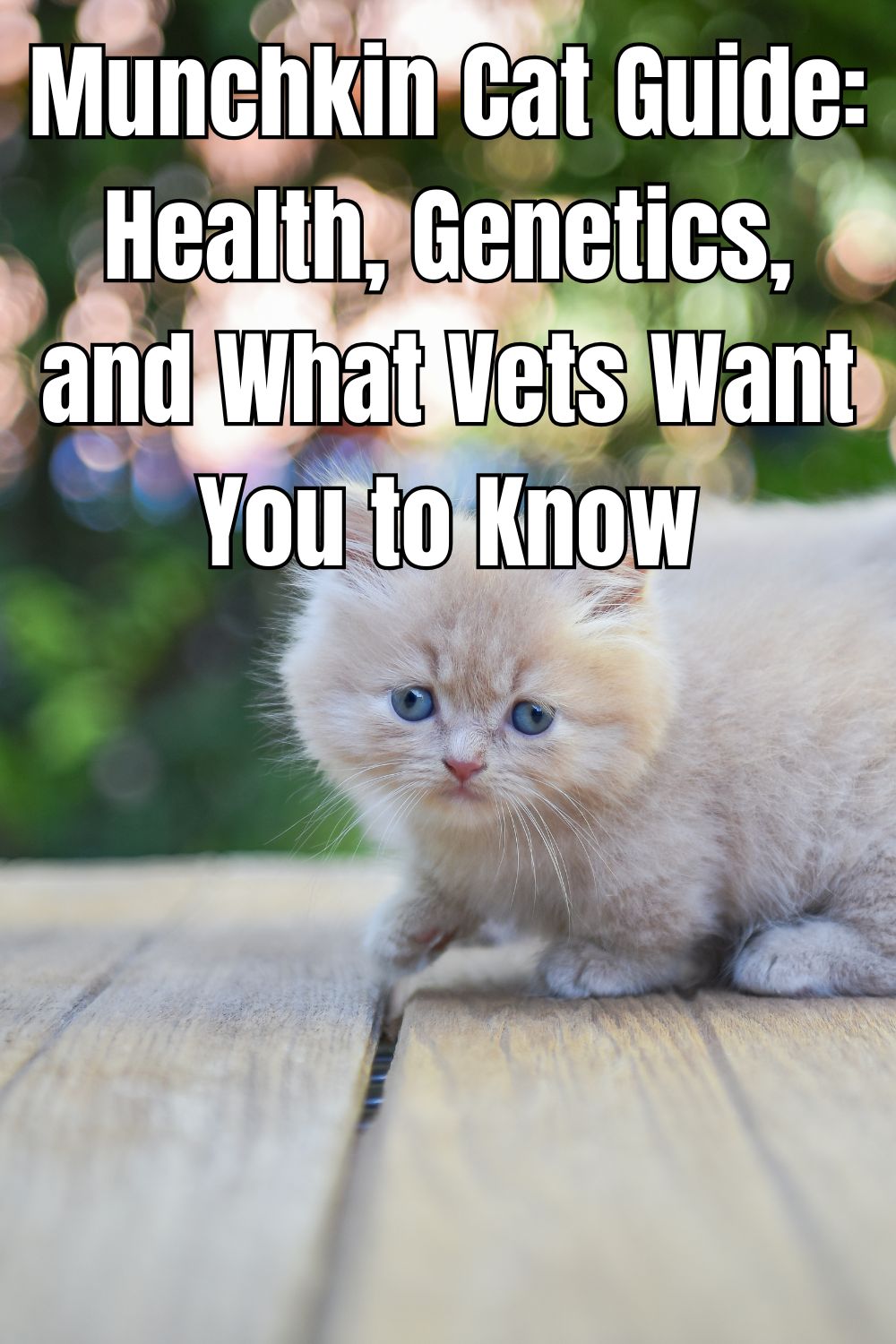
Munchkin Cat Guide: Health, Genetics, and What Vets Want You to Know
A Munchkin cat is a domestic breed defined by a naturally occurring mutation in the UGDH gene on feline chromosome B1, which causes disproportionate shortening of all four limbs while leaving the head, body, and tail structurally normal – a condition classified as mesomelic chondrodysplasia and distinct from the dwarfism mutations seen in dogs or humans.
Munchkin cat sparks both delight and concern in equal measure among cat lovers and veterinary professionals worldwide. The breed’s appearance is striking, the genetics are genuinely unusual, and the health debate in veterinary circles is ongoing. Prospective owners deserve accurate, evidence-based answers rather than either dismissive concern or uncritical reassurance.
What Is a Munchkin Cat and Where Did the Breed Come From?
The Munchkin cat is the original dwarf cat breed, with short-legged individuals documented as far back as 1944. The modern breed traces to 1983, when Sandra Hochenedel found a pregnant short-legged stray named Blackberry in Louisiana. Half of Blackberry’s kittens inherited the short-leg trait, forming the foundation of today’s breed. TICA formally accepted the Munchkin into its registry in 1991, making it one of the more recently recognized pedigree breeds.
Recognition remains limited and contested. TICA maintains the breed’s championship status and states that years of research have validated that no debilitating genes are associated with it. The Cat Fanciers’ Association and several international registries do not recognize the breed, citing ongoing ethical concerns about deliberately propagating a structural mutation. Prospective owners should understand that this is an active debate in veterinary and cat fancy communities, not a settled question on either side.
What Is the Genetic Cause of the Munchkin’s Short Legs?
The Munchkin’s short legs result from a structural variant within the UGDH gene (UDP-glucose 6-dehydrogenase) on feline chromosome B1. A peer-reviewed study published in BMC Genetics, 2020, using whole genome sequencing of 89 cats, confirmed this UGDH structural variant as the cause of the standard Munchkin phenotype – the first study to identify the precise mutation responsible.
The mutation follows an autosomal dominant inheritance pattern: one copy produces the short-leg trait. Two copies are lethal – homozygous embryos do not develop and are naturally reabsorbed. This is why responsible breeders always pair a short-legged Munchkin with a long-legged cat: litters from Munchkin-to-Munchkin pairings have reduced size due to the loss of homozygous embryos, and the practice offers no benefit while carrying unnecessary risk.
Crucially, the UGDH mutation is distinct from the FGF4 mutation that causes short legs in dogs like Dachshunds and Corgis. Munchkins are mesomelic – only the middle sections of the limbs are shortened – whereas dog chondrodystrophy involves a different gene, different mechanism, and different secondary health consequences. Direct health comparisons between short-legged dogs and Munchkin cats are therefore not scientifically valid.
Are Munchkin Cats Healthy? What the Evidence Shows
The BMC Genetics study confirmed that heterozygous standard Munchkins – the standard pet population – exhibit reduced leg length without the impaired health seen in homozygous conditions, drawing a parallel to Dexter cattle, which carry a similar dominant dwarfism gene without systemic disease. TICA’s position reflects this finding.
What the evidence does document as real risks:
- Lordosis and kyphosis: Spinal curvature conditions that can develop between 1 and 4 years of age, potentially affecting cardiac and pulmonary function in severe cases. Mild presentations are common and often asymptomatic; severe cases are less common in well-bred individuals.
- Pectus excavatum: A chest deformity ranging from cosmetic to clinically significant, present from birth in affected individuals.
- Early-onset osteoarthritis: The altered joint mechanics from shortened limbs create abnormal weight distribution that accelerates cartilage wear, particularly in the elbows and hips.
- Obesity risk: Shortened limbs bear excess weight less effectively than standard legs. Even modest weight gain measurably compounds joint stress.
The honest summary: a Munchkin from a health-tested breeder who pairs Folds with straights and avoids Munchkin-to-Munchkin breeding carries manageable, well-documented risks – not a guarantee of health problems, but not a clean bill of health either. Source quality is the variable most within an owner’s control.
What Are the Key Munchkin Cat Facts Every Owner Should Know?
| Feature | Detail |
| Adult weight | 5-9 lbs – consistent with average domestic cats |
| Leg classification | Mesomelic shortening (middle limb bones only) |
| Coat types | Both shorthair and longhair; all colors and patterns |
| TICA recognition | Yes, since 1991 |
| CFA recognition | No |
| Lifespan | 12-15 years with appropriate care |
| Homozygous viability | Not viable – embryos reabsorbed naturally |
Munchkins maintain normal hunting instincts, play behavior, and social engagement despite reduced jumping ability. They follow owners between rooms, respond to their names, and are consistently described as curious and people-oriented. Their limited vertical range is a practical consideration – low-entry litter boxes, ramps rather than high jumps, and floor-level enrichment matter more for this breed than for standard cats.
What Does Responsible Munchkin Care Require?
Source Verification
Confirm the breeder pairs short-legged Munchkins with long-legged cats only, provides health documentation for both parents, and does not breed for the shortest possible legs as a premium feature. A breeder who cannot explain the homozygous lethality issue clearly has not done the foundational research required.
Weight Management
Measure every meal. Free-feeding a Munchkin is not appropriate given the compounding effect of excess weight on already-stressed joints. Discuss ideal body condition targets with your veterinarian annually.
Proactive Veterinary Monitoring
Twice-yearly wellness exams through age 7, then annually. Each exam should include spinal alignment assessment, joint mobility evaluation, and body condition scoring. Early identification of lordosis or joint changes enables management before they become limiting.
Environmental modifications to implement from day one: low-sided litter boxes, ramps or steps to elevated furniture, and scratching posts at floor level rather than standard height.
What Every Munchkin Owner Should Understand Before Deciding
The Munchkin cat is not a breed for owners who want a low-maintenance, low-veterinary-engagement pet. It is a breed for owners who understand its genetics honestly, source it responsibly, and commit to the specific care practices that make the documented health risks manageable over a 12 to 15-year lifespan.
A Munchkin from a health-tested, responsible breeding program, maintained at a healthy weight and monitored proactively, has a realistic outlook for a full, comfortable life – but that outcome is earned through consistent owner action, not assumed from the breed’s generally positive reputation.
The charm is genuine. The health considerations are real. Owners who go in understanding both are the ones who build the kind of relationship this breed is capable of delivering.
Frequently Asked Questions
What is a Munchkin cat, exactly?
A Munchkin cat is a domestic breed whose short legs result from a naturally occurring structural variant in the UGDH gene on feline chromosome B1, confirmed by peer-reviewed whole genome sequencing research published in BMC Genetics, 2020. The mutation shortens only the limbs – the body, head, and tail develop normally. The breed is recognized by TICA but not the CFA.
Are Munchkin cats healthy compared to other breeds?
Munchkins from responsible breeders, where short-legged cats are paired with long-legged cats, not Munchkin-to-Munchkin, have a manageable health profile. Documented risks include lordosis, pectus excavatum, and early-onset osteoarthritis. These are real but not inevitable in well-bred individuals maintained at a healthy weight with regular veterinary monitoring.
What are the most important Munchkin cat facts a buyer should know?
The homozygous gene is lethal, making Munchkin-to-Munchkin breeding irresponsible. The UGDH mutation is distinct from dog chondrodystrophy – health comparisons with Dachshunds are not scientifically valid. Weight management is the single most impactful owner-controlled health variable. Lifespan is 12 to 15 years with appropriate care.
How do I find a responsible Munchkin cat breeder?
Look for TICA registration, documentation showing the short-legged parent was paired with a long-legged cat, written parental health records, and a breeder who discusses the homozygous lethality issue openly. Any breeder marketing the “shortest legs possible” as a premium feature is prioritizing appearance over health – a clear red flag.
Can Munchkin cats live normal, active lives despite their short legs?
Yes, with appropriate environmental support. Munchkins run, play, and engage socially with normal feline energy. They cannot jump to the same heights as standard cats, which requires low-entry litter boxes, ramps to elevated furniture, and floor-level enrichment. With these accommodations and consistent weight management, most Munchkins navigate daily life without meaningful limitation.
Leave A Reply!