Did you know you can have a beautiful bathroom on a budget. Best of all no reno needed! Find out how you can renovate without going broke.
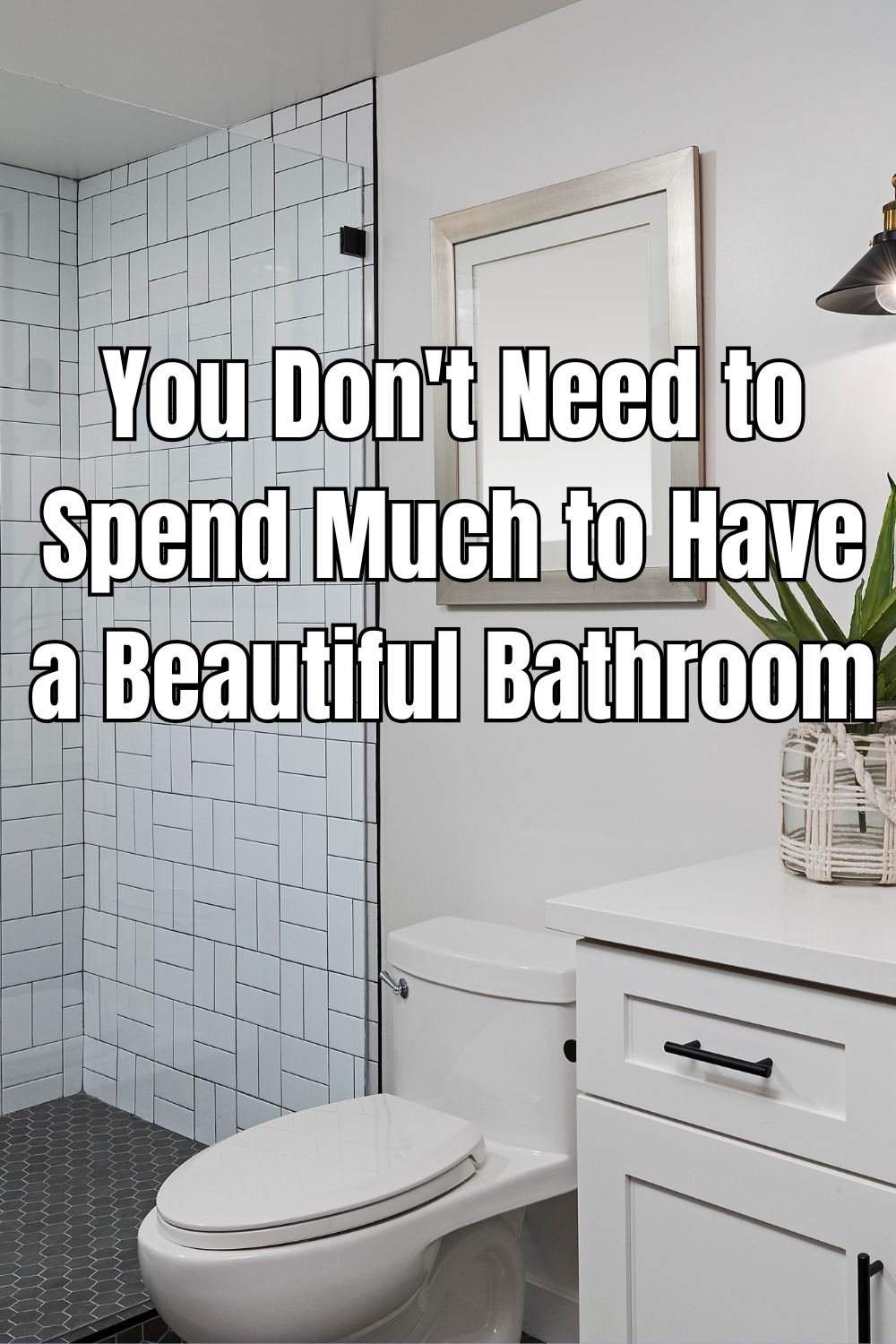
Why Bathroom Renovations Don’t Have to Break the Bank
My biggest challenge when I speak to my clients is the idea that transforming your bathroom needs a major investment to get a big change. But most bathrooms that look old and run-down do not really need a full renovation. They just need a cosmetic upgrade. The starting point for a great budget renovation is knowing the difference.
A full renovation, changing the plumbing and the walls and putting in a new waterproofing membrane, the price depending on what you are getting done, and what kind of fittings you want.
But a cosmetic renovation, changing the accessories and the paint and a new bathroom vanity and taps and the fittings to a new colour scheme, can be a great-looking beautiful bathroom. It’s surprising how many homeowners only need a cosmetic upgrade, if they’re honest about their bathrooms.
It all starts with assessing your bathroom, so you know what changes it really needs, then you spend money in those areas only.
Smart Material Choices That Cut Costs Without Cutting Corners
Once you know what type of upgrade your bathroom actually requires, the next area where you can really save money on material costs is where the price difference lies.
For wall tiles, ceramic tiles are the cheapest. Porcelain is more costly but it is not as porous so is harder to absorb the water, which is why it would be suitable for the bathroom floor.
For bathrooms, my recommendation is that if the budget will permit, you go with porcelain instead of ceramic tile for the floor. You will definitely see the difference over ten years and it is not too much of a price increase.
If you’re looking at budget flooring for bathrooms, let me be clear: a standard laminate is not going to work here. However, there is hybrid flooring, which is waterproof and safe in a bathroom if you do not have the budget to lay tiles on the floor.
Another issue is the waterproofing. Never skimp on waterproofing. The Housing Provisions states that the walls in the shower area must be waterproofed to a height of not less than 1,800 mm from the floor substrate. Shower floors are to be waterproofed as well. The standard can be met as an alternative option, and this will be handled by your licensed waterproofer, but it’s good to know what the building code requirements are before any wall tiles are set. Allow a minimum of 24 hours before tiling can begin over any waterproofed surface.
A cost-effective vanity will be a vanity that has a PVC carcass, as it is actually waterproof and the cost-effective choice. MDF is not waterproof and will deteriorate over time in a poorly ventilated bathroom.
Layout and Sizing: Work With What You Have
Before you pick up a tile to measure your walls, take a look at your floor plan and see where the plumbing sits.
The biggest cost saver when renovating a bathroom is to have all of the plumbing stay in place. As soon as you move the toilet suite and the plumbing behind it, move the plumbing from the basin waste and/or the drainage from the shower, you will need to engage a licensed plumber to do significant plumbing work which will cost you more. A vanity with a width of 600 mm will generally fit well in the majority of single-basin applications, while a shower space that is 900 mm wide is the smallest practical size to work with. Likewise, most back-to-wall toilet suites call for 800 mm of clear space between the rear wall and the swinging door. Staying within these guidelines, and refraining from repositioning walls, means that the bathroom remodel can remain cosmetic in scope.
The one caveat I need to make here is with regard to wall-hung vanities. The unit must be securely mounted within studwork and the framing of the wall must be confirmed prior to the selection of the vanity unit.
Budget Fixtures and Fittings That Actually Perform
Now that your design is set, and your plumbing points have been determined, you’re free to begin choosing the fixtures and fittings.
It is possible to source a cheap bathroom vanity from a quality supplier — produce a wide selection of PVC and MDF vanities, which look and perform very well — while simultaneously maintaining the aesthetic quality of the finished design. Remember that the vanity carcass and the basin on it are independent specifications, so be sure to ask if a basin is included in the quoted price, or if there is an additional charge, and include the mixer tap and waste as separate items on your budget.
When choosing basin tapware, opt for ceramic disc valves rather than rubber washers. This will make a significant difference to the tap’s performance in regular use. When it comes to floor tiles, slip resistance is equally important to get right.
With floor tiles, ensure that you request a minimum P3 slip resistance rating for bathrooms and shower floors. Be sure to confirm this with your tile supplier before making a purchase.
What To Spend More On And What To Save On
Your attention needs to now focus on how that total budget is apportioned across your entire scope of work.
Spend less on things such as towel rails, toilet roll holders, and robe hooks. You can specify a complete suite of these fixtures without compromising on your design. Another item is a mirror or shaving cabinet; LED shaving cabinets can make a valuable contribution to a budget-sized space.
Waterproofing, tiling, and plumbing connections must be carried out by licensed tradespeople.
A beautiful bathroom requires careful consideration of your priorities, discipline with regards to product selection.
Leave A Reply!