Are you planning on making the switch from contacts to Lasik? LASIK vs Contact Lenses: Why So Many People Are Making the Switch
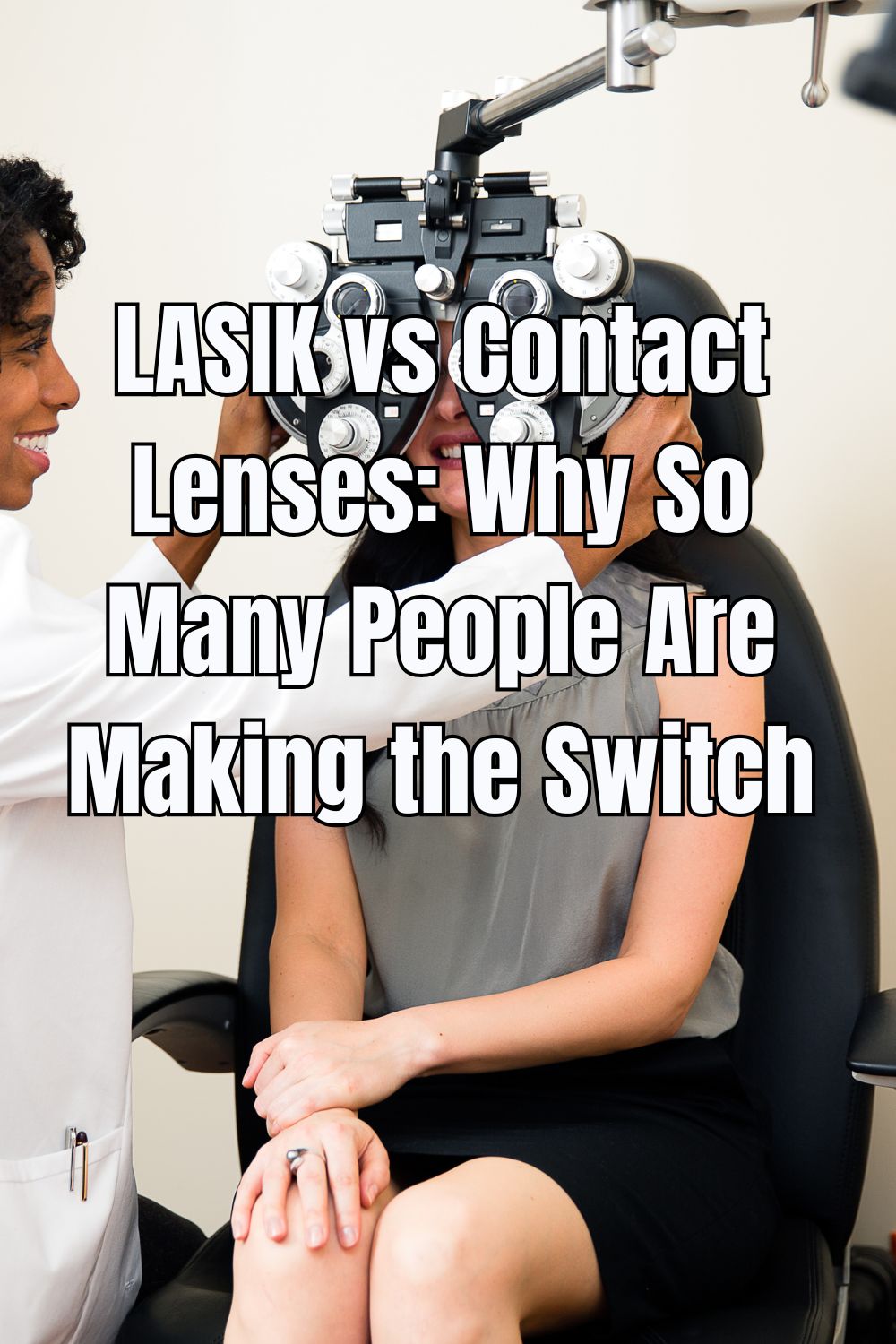
LASIK vs Contact Lenses: Why So Many People Are Making the Switch
If you’ve been wearing contact lenses for years, you’ve probably made peace with the routine. The morning fumble to get them in, the late-night dry eye, the constant stock of solutions and cases, the days when they just don’t sit right. For most contact lens wearers, it’s not that contacts are terrible, it’s that they’re relentless. There’s never a break from them.
LASIK has been steadily changing that calculation for millions of people. The FDA’s own PROWL studies, the most comprehensive prospective LASIK research ever completed, found that more than 95% of patients were satisfied with their vision following surgery, with less than 1% experiencing any difficulty with usual activities due to visual symptoms. For those seriously weighing their options, Beverly Hills has long been recognized as one of the world’s leading destinations for LASIK and refractive surgery, home to surgeons whose standards are as exacting as the patients they treat.
The Real Cost of Wearing Contact Lenses
Contact lenses feel like a modest expense, until you add it all up. The ongoing costs of lenses, solution, cases, annual check-ups, and backup glasses accumulate significantly over time. Industry estimates consistently show that the lifetime cost of contact lens wear reaches $15,000 to $20,000 or more over a 30 to 40-year wearing period. LASIK, by contrast, is typically a one-time expense that pays for itself within a few years.
But the financial comparison is only part of the picture. The less visible cost is the daily friction, the time spent on lens care, the discomfort on long-haul flights, the irritation in air conditioning or dry environments, and the inconvenience of swimming or sport. These are costs that don’t show up on a receipt but add up in a very real way over years of daily wear.
The Health Risks of Long-Term Contact Lens Wear
Most contact lens wearers don’t give much thought to the health risks of their lenses but long-term wear carries genuine risks that are worth understanding before comparing it to LASIK. Studies have found that contact lens wearers are significantly more susceptible to eye infections than the general population, including serious conditions that can threaten vision.
The most common contact lens-related health concerns include:
- Bacterial and fungal keratitis: corneal infections that can cause scarring and permanent vision damage if not treated promptly
- Acanthamoeba keratitis: a rare but serious infection associated with contact lens wear and water exposure
- Chronic hypoxia: long-term oxygen deprivation of the cornea from lens wear, which can lead to corneal neovascularisation over time
- Dry eye syndrome: contact lenses accelerate tear film evaporation, and chronic dry eye is one of the most common complaints among long-term wearers
These risks don’t affect every contact lens wearer but they are real, well-documented, and cumulative. The longer you wear lenses, the more exposure you accumulate.
What LASIK Actually Involves
LASIK works by permanently reshaping the cornea, the transparent front surface of the eye, using a precisely calibrated laser. The procedure corrects the refractive error that causes blurred vision, eliminating or dramatically reducing the need for corrective lenses. For most patients, the procedure takes around 15 minutes per eye, and vision improves within 24 hours.
Modern LASIK has come a long way from its first-generation iteration. Bladeless femtosecond lasers and wavefront-guided or topography-guided treatment platforms now allow surgeons to create corneal profiles that are individually mapped to each patient’s eye, improving outcomes and significantly reducing the side effects that were common in earlier techniques.
Patients exploring Beverly Hills LASIK at this level of precision benefit from surgeons who combine leading-edge technology with decades of refractive surgery experience. Maloney-Shamie-Hura Vision Institute is one practice where that combination is central to every procedure, offering highly customised treatment planning that goes beyond standard candidacy screening to optimise both safety and outcome.
A Side-by-Side Comparison
Laid out directly, the comparison between LASIK and long-term contact lens wear looks like this:
| LASIK | Contact Lenses | |
| Cost | One-time investment averaging $4,000–$5,000 | $500–$700+ per year for life — $15,000–$20,000+ over 30 years |
| Convenience | Wake up and see clearly — no daily routine | routineDaily insertion, removal, cleaning, supply management, and travel logistics |
| Infection risk | Less than 1% complication rate | 8x more likely to cause serious eye infections than LASIK over a comparable period |
| Dry eye | Temporary in most patients — typically resolves within 3–6 months | Chronic dry eye is a persistent issue for many long-term wearers |
| Permanence | Permanent corneal reshaping with results lasting decades | Requires ongoing daily use indefinitely |
No comparison is entirely simple; individual circumstances vary, and not everyone is a LASIK candidate. But for the majority of people who qualify, the comparison points strongly in one direction.
Who Makes a Good LASIK Candidate
LASIK is not right for everyone, but it is suitable for the majority of contact lens wearers who inquire. The key qualifying criteria include:
- Stable prescription for at least one to two years : vision that is still changing is not yet ready for LASIK
- Sufficient corneal thickness: enough tissue for safe reshaping without compromising the structural integrity of the cornea
- No significant dry eye condition prior to surgery: moderate to severe pre-existing dry eye can be worsened by LASIK
- Good general eye health: no conditions like keratoconus, advanced glaucoma, or corneal scarring that would affect outcome or safety
- Age 18 or above: ideally in the 20s to 40s, when prescriptions are most stable and healing is most predictable
If you don’t qualify for traditional LASIK, there are alternatives, PRK, SMILE, and ICL, that can achieve similar outcomes for patients with thinner corneas or higher prescriptions. A thorough pre-operative evaluation will identify the right approach for your specific eye profile.
Final Thought
So why are so many contact lens wearers choosing LASIK? The answer is straightforward. Over a lifetime, contacts cost more, carry greater infection risk, require daily commitment, and deliver vision that is always dependent on a lens that has to be managed, stored, and replaced. LASIK, done once by a skilled surgeon, corrects the underlying refractive error permanently, removing the dependency entirely.
For anyone who has been quietly wondering whether the switch is worth it, the most meaningful next step is a consultation. A thorough evaluation will tell you whether you’re a candidate, what to expect, and what your vision could look like, for the rest of your life.
Leave A Reply!