Learn about the All-on-4 dental implant process, its benefits, and how it offers a permanent solution for tooth loss.
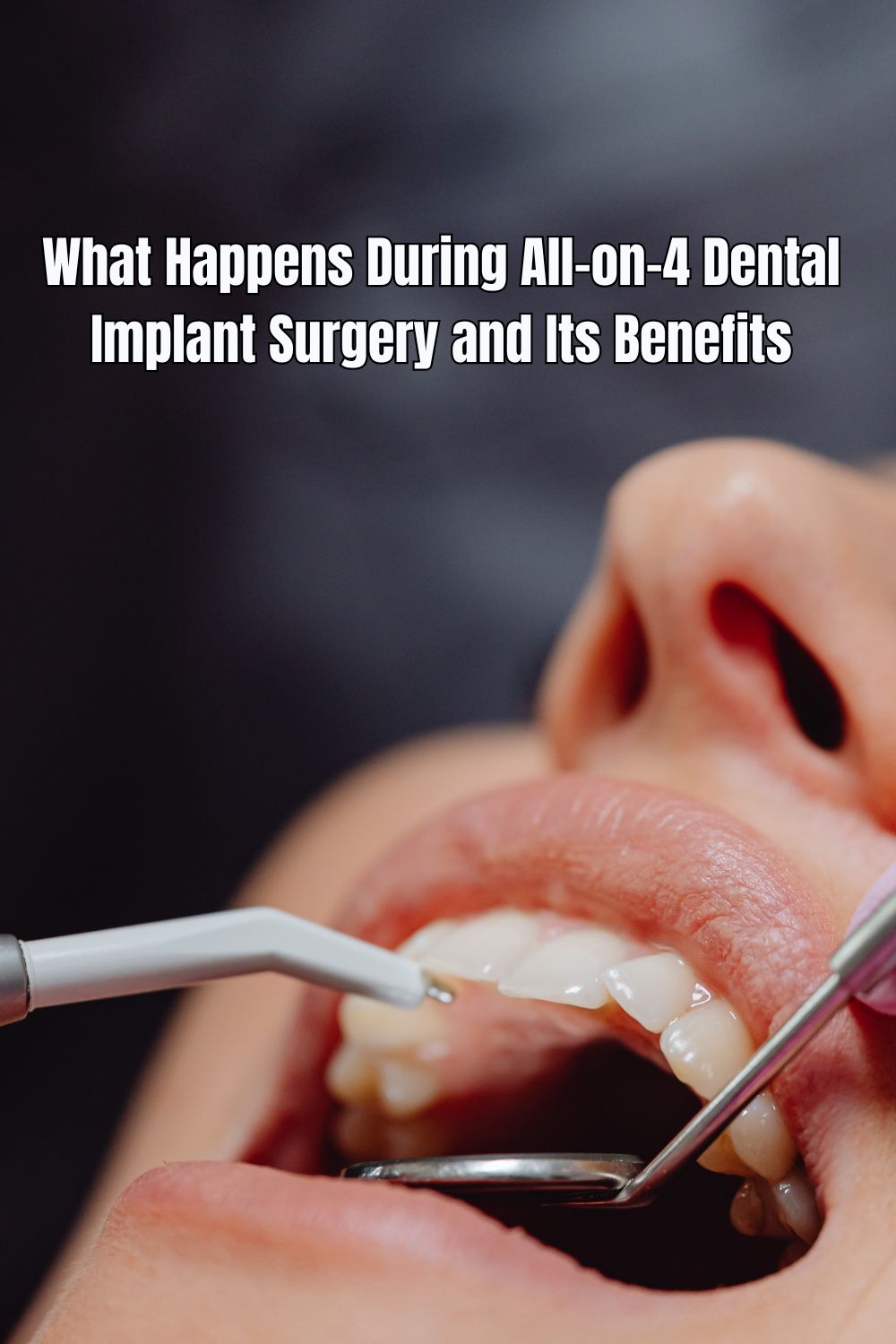
What Happens During All-on-4 Dental Implant Surgery and Its Benefits
According to the American Dental Association‘s 2024 oral health data, over 120 million Americans are missing at least one tooth, with 36 million completely edentulous — yet traditional denture wearers report satisfaction rates hovering around 60%. As dental implant technology advances and patient expectations for permanent solutions rise, the gap between what conventional dentures deliver and what patients actually want continues to widen. Enter All-on-4 implants: a surgical approach that’s reshaping how dental professionals think about full-arch restoration. For individuals facing complete tooth loss or extensive dental problems, understanding what happens during this procedure — and why it’s gained such momentum among both patients and practitioners — has become essential for making informed decisions about long-term oral health.
How Does the All-on-4 Surgery Actually Work?
The All-on-4 procedure unfolds as a carefully orchestrated surgical process that typically takes three to four hours from start to finish. After administering local anesthesia (and sedation if requested), the oral surgeon begins with precise planning using 3D imaging to map the exact placement sites for the four implants that will support the entire arch.
The surgical sequence starts with any necessary tooth extractions, followed immediately by the placement of four titanium implants in predetermined positions. Here’s where All-on-4 gets technical: the two front implants are placed vertically, while the back two are angled at approximately 30-45 degrees. This angled placement is crucial — it allows the implants to anchor into denser bone areas while avoiding sensitive structures like sinuses or nerves.
What sets All-on-4 apart from traditional implant approaches is the immediate loading concept. Within hours of implant placement, a temporary prosthetic bridge is attached directly to the implants. Picture someone arriving at the dental office with failing teeth or ill-fitting dentures and walking out the same day with a fixed, functional set of teeth. The bone preparation involves creating precise channels for each implant using progressively larger drills, ensuring optimal stability without compromising surrounding bone integrity.
The temporary bridge serves multiple purposes during the initial healing phase: it protects the implant sites, maintains proper spacing for bone integration, and allows patients to eat soft foods immediately. This immediate function represents a dramatic departure from traditional implant protocols that required months of healing before any prosthetic attachment.
Most patients experience the surgery under local anesthesia with optional conscious sedation, making the process comfortable while allowing them to return home the same day. The precision required means every step — from initial bone assessment to final prosthetic attachment — follows strict protocols designed to maximize long-term success.
What Makes All-on-4 Different from Other Implant Options?
The biomechanical principles underlying All-on-4 create distinct advantages that separate it from both traditional implant methods and conventional dentures. Understanding these differences requires looking at how load distribution works across the arch and why fewer implants can actually provide superior stability.
How Are All-on-4 Implants Placed Compared to All-on-3 or Mini Implants?
While All-on-3 systems use three implants per arch, the physics of load distribution become problematic under the heavy chewing forces generated by molars. All-on-4’s four-point support system creates what engineers call a “stable platform” — imagine the difference between a tripod and a four-legged table when supporting weight. The angled posterior implants in All-on-4 systems can handle significantly more lateral force than the straight placement used in most All-on-3 approaches.
Mini implants, though less invasive, typically measure only 1.8-3.3mm in diameter compared to All-on-4’s standard 3.75-5mm implants. This size difference translates directly into load-bearing capacity. Consider someone biting into an apple or chewing tough meat — mini implants simply cannot withstand the same forces that full-sized All-on-4 implants handle routinely.
How Does All-on-4 Compare with Dentures and Single Implants?
Traditional dentures rest on the gums and rely on adhesives or natural suction, creating inherent instability that worsens as underlying bone resorbs over time. All-on-4 implants integrate directly with jawbone tissue, creating a rigid connection that stimulates bone preservation rather than allowing continued deterioration.
Single implant approaches for full-arch restoration typically require 6-8 implants per arch, necessitating more extensive surgery, longer healing times, and significantly higher costs. All-on-4 achieves comparable stability with half the implants by leveraging the angled placement strategy and immediate loading protocol. The engineering principle is simple: strategic implant positioning can accomplish what brute-force approaches (more implants) achieve with greater complexity and expense.
What Functional Benefits Do All-on-4 Implants Provide?
The functional improvements patients experience with All-on-4 implants extend far beyond basic chewing ability, addressing fundamental quality-of-life issues that affect daily social interactions and long-term health outcomes. Chewing efficiency represents the most immediately noticeable change — research from the Journal of Oral Rehabilitation shows All-on-4 patients achieve 85-90% of normal bite force, compared to 15-25% for conventional denture wearers.
Speech improvements occur because All-on-4 prosthetics don’t shift during conversation. Consider how traditional dentures can slip during important conversations, causing embarrassing clicks or slurred pronunciation of certain consonants. All-on-4’s fixed attachment eliminates this unpredictability, allowing natural tongue positioning and airflow patterns that support clear articulation.
The bone preservation aspect provides long-term benefits that compound over years. When natural teeth are lost, the underlying jawbone begins resorbing at a rate of approximately 25% in the first year alone. All-on-4 implants provide the mechanical stimulation that signals bone tissue to maintain its density and structure. For those interested in more comprehensive implant solutions, affordable all on 4 implants can provide lasting oral health benefits with proper candidacy evaluation.
Aesthetic outcomes improve not just through tooth appearance but also through facial support. Traditional dentures often create a sunken facial appearance as underlying bone diminishes. All-on-4 prosthetics maintain proper lip support and facial height, preserving more youthful facial proportions.
Daily maintenance becomes significantly simpler compared to removable dentures. All-on-4 teeth are brushed and flossed like natural teeth, eliminating the need for denture adhesives, overnight soaking solutions, and the social anxiety associated with removable appliances. This simplified care routine often leads to better overall oral hygiene compliance and improved gum health around the implant sites.
What Risks Are Involved and What Is the Recovery Like?
What Are the Potential Risks of All-on-4 Surgery?
While All-on-4 surgery maintains high success rates, understanding potential complications allows patients to make informed decisions and recognize warning signs early. Infection represents the most common immediate risk, typically occurring in 2-4% of cases according to oral surgery literature. Signs include persistent swelling beyond day three, increasing pain rather than gradual improvement, or unusual discharge from implant sites.
Implant failure can occur during the initial integration period (first 3-4 months) or years later due to factors like inadequate oral hygiene or excessive force from teeth grinding. Early failure often results from insufficient bone quality discovered during surgery or patient factors like uncontrolled diabetes affecting healing. Late failure typically stems from peri-implantitis — essentially gum disease around implants that can lead to bone loss and implant loosening.
Nerve damage represents a rare but serious risk, particularly for lower arch procedures where implants might contact the mandibular nerve. This could result in temporary or permanent numbness in the lip or chin area. Experienced surgeons mitigate this risk through precise pre-surgical planning and real-time monitoring during implant placement.
Sinus complications can occur with upper arch All-on-4 procedures if implants inadvertently perforate the sinus membrane. While usually manageable, this can delay healing and require additional procedures to repair the sinus lining.
What Can Patients Expect During Recovery?
The recovery timeline follows predictable phases, though individual experiences vary based on factors like overall health, adherence to post-operative instructions, and whether extractions were performed simultaneously. Days 1-3 typically involve moderate swelling and discomfort managed effectively with prescribed medications. Ice application during the first 24 hours helps control swelling, while soft foods prevent excessive pressure on healing sites.
Weeks 1-2 mark the transition from acute healing to tissue adaptation. Most patients return to work within 3-5 days, though those with physically demanding jobs may need longer. The temporary prosthetic requires dietary modifications — avoiding hard, crunchy, or sticky foods that could dislodge or damage the healing sites.
Months 1-4 represent the critical integration period where bone tissue grows around the implant surfaces, creating the permanent bond essential for long-term success. Regular follow-up appointments monitor this process and address any concerns before they become serious problems.
Full functional adaptation often takes 6-8 weeks as patients learn to use their new teeth effectively. This includes adjusting chewing patterns and learning optimal oral hygiene techniques specific to implant-supported prosthetics.
What Do Long-Term Studies Say About Success and Satisfaction?
Clinical research spanning over two decades provides substantial evidence supporting All-on-4 outcomes, with survival rates consistently exceeding 95% at the 10-year mark according to studies published in the International Journal of Oral and Maxillofacial Implants. These numbers become more impressive when considering that many All-on-4 patients begin treatment with compromised bone structure or systemic health conditions that complicate healing.
Patient satisfaction surveys reveal consistently high ratings across multiple quality-of-life measures. A 2023 systematic review analyzing over 3,000 All-on-4 patients found that 92% reported being “satisfied” or “very satisfied” with their treatment outcomes five years post-surgery. The most frequently cited improvements included restored confidence in social situations, elimination of dietary restrictions, and relief from the daily inconveniences associated with removable dentures.
Research comparing All-on-4 with traditional implant approaches shows comparable success rates but significantly reduced treatment time and cost. Studies tracking bone health around All-on-4 implants demonstrate stable bone levels over extended periods, contrasting sharply with the progressive bone loss seen in denture wearers.
The evidence also reveals that success correlates strongly with proper patient selection and surgical execution. Centers with extensive All-on-4 experience report higher success rates than those performing the procedure occasionally, emphasizing the importance of choosing practitioners with demonstrated expertise in this specific technique.
Long-term prosthetic durability data shows that while the implants themselves typically last decades, the attached teeth may require replacement every 10-15 years due to normal wear — similar to the replacement cycle for traditional dental work but with the advantage of maintaining the underlying implant foundation.
For individuals considering this transformative procedure, the research strongly supports All-on-4 as a predictable solution that delivers both immediate function and lasting results. The key lies in thorough evaluation, realistic expectations, and commitment to the ongoing oral hygiene practices that protect this investment in long-term oral health.
Leave A Reply!