Uncover what a natural-looking facelift involves and how surgeons skillfully avoid the overdone appearance many fear.
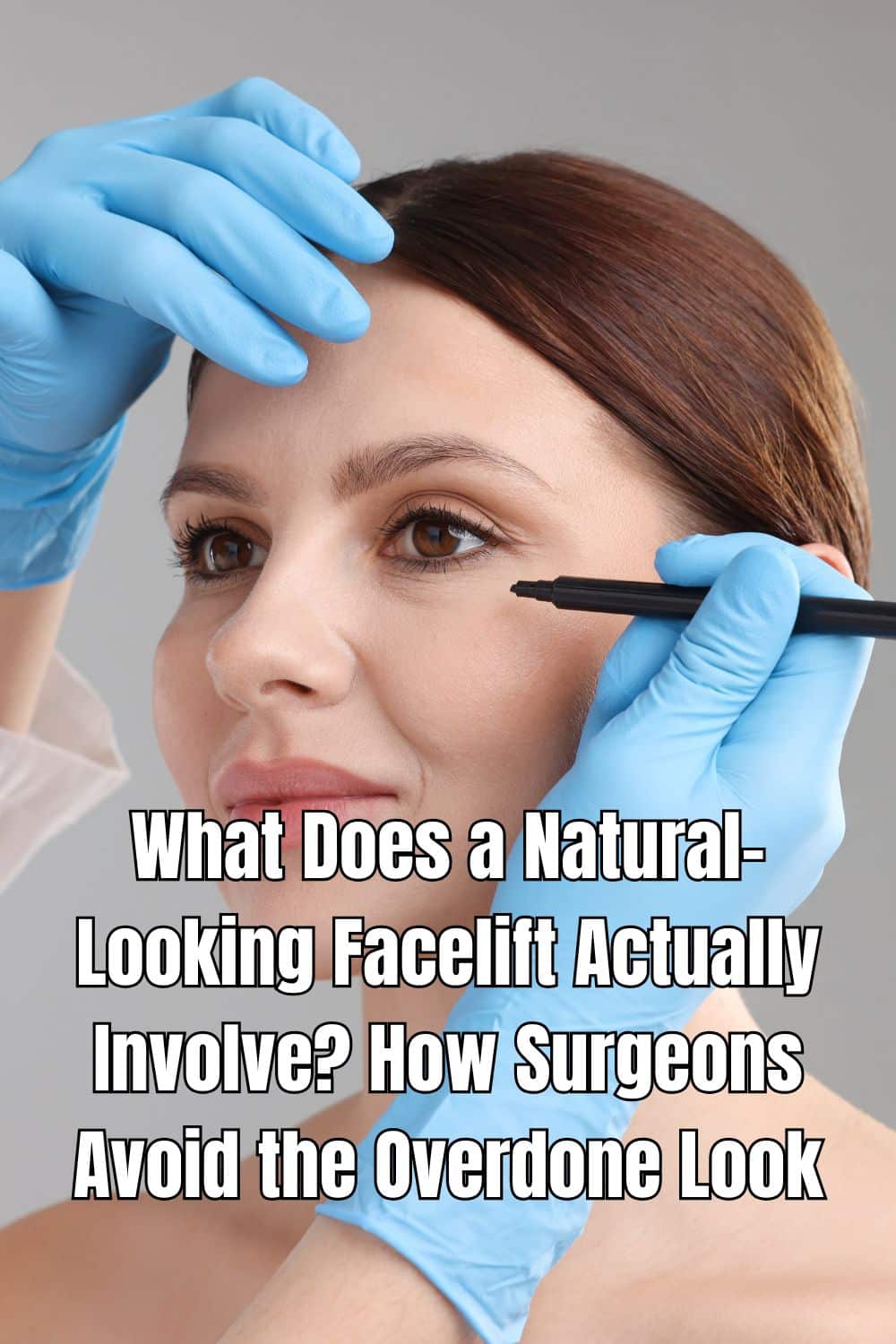
What Does a Natural-Looking Facelift Actually Involve? How Surgeons Avoid the Overdone Look
There’s a specific kind of facelift that people notice — and not in the way the patient intended. The pulled skin, the startled expression, the features that look like they’ve been relocated rather than refreshed. It has a name in surgical circles: the “operated look.” And avoiding it is, somewhat ironically, one of the more technically demanding things a facial plastic surgeon can do.
San Francisco has a long-standing culture of understated aesthetics — people here tend to want results that read as healthy and rested, not worked on. That sensibility has pushed the conversation around facelift technique forward in interesting ways. The demand isn’t just for surgery that works. It’s for surgery that’s invisible. And achieving that requires a specific understanding of why facelifts go wrong in the first place.
1. The Overdone Look Has a Specific Cause — and It’s Fixable
Most visibly “done” facelifts share a common origin: too much tension placed directly on the skin. For decades, the standard approach involved pulling skin taut and excising the excess. It worked in the short term. But skin under sustained tension doesn’t hold — it stretches back, distorts, and produces exactly the tight, shiny, unnatural appearance that most patients are trying to avoid.
Modern technique addresses this at a deeper level. Surgeons performing a Facelift in San Francisco now routinely work with the SMAS — the layer of muscle and connective tissue beneath the skin — rather than relying on the skin itself to do the lifting. Silicon Valley Institute for Aesthetics, approaches the procedure this way, repositioning the structural foundation first so the skin can follow without being placed under undue stress. The result holds longer and looks more coherent with the patient’s natural anatomy.
2. The SMAS Layer Is Where the Real Work Happens
The SMAS — superficial musculoaponeurotic system — is essentially the scaffolding of the face. It connects the facial muscles to the overlying skin and is responsible for a significant amount of what we perceive as facial aging: the jowls, the deepening nasolabial folds, the loss of definition along the jawline.
When a surgeon repositions the SMAS rather than just pulling the skin, they’re addressing the structural cause of aging rather than the surface symptom. The skin then re-drapes more naturally because it isn’t being asked to carry the mechanical load. This is why two patients can have facelifts performed in the same year and one looks natural while the other doesn’t — technique at this layer is often the differentiating factor.
What SMAS-based techniques can address:
- Sagging along the midface and cheek
- Jowl formation at the jawline
- Looseness in the neck and under the chin
- Loss of the natural angle between the jaw and neck
3. Facial Volume Plays a Bigger Role Than Most People Expect
Aging isn’t just about skin laxity. It’s also about volume loss — the gradual depletion of fat pads beneath the skin that give the face its youthful fullness. A facelift that only addresses sagging without accounting for volume can produce a result that looks tight but hollow, which is its own version of unnatural.
Research indexed on PubMed Central documents how age-related facial fat compartment depletion directly contributes to the hollowed, descended appearance most patients seek to correct — which is why volume restoration has become an integral part of modern facelift planning rather than an optional add-on. Experienced surgeons factor this in by incorporating fat grafting into the procedure, transferring small amounts of the patient’s own fat to areas that have depleted — typically the temples, under-eye area, and mid-cheek. Others recommend complementary injectables either before or after surgery. The goal is a face that looks genuinely younger, not a face that looks lifted. Those are different outcomes, and the approach that gets you there requires thinking about volume and structure simultaneously.
4. Incision Placement Is a Craft, Not a Formula
Where a surgeon places incisions — and how they close them — has a direct impact on whether a facelift is detectable. The classic tell of a poorly executed facelift is distortion around the ears: hairline displacement, earlobe stretching, or visible scarring at the temples. These aren’t inevitable. They’re technical errors.
A refined incision placement and tension-free closure are consistently identified as primary factors in producing natural postoperative results with minimal visible scarring. Surgeons who prioritize these details plan incisions along natural contours — within the ear, along the hairline, in the natural crease behind the ear — so that even when the hair is up or the ears are exposed, there’s nothing to see.
5. The Consultation Reveals More Than the Surgeon’s Technique
You can learn a lot about how a facelift will turn out before anyone enters an operating room. A thorough consultation should involve a candid discussion of your specific anatomy — not a generic presentation of what facelifts do in general. Bone structure, skin quality, degree of volume loss, the position of the fat pads, the strength of the underlying muscle layer — all of it informs what approach will produce a natural result for that particular face.
Red flags worth noting during a consultation:
- A surgeon who doesn’t discuss the SMAS or deep tissue work
- Before-and-after photos that all look similar regardless of patient anatomy
- A timeline that feels rushed or a process that skips detailed facial analysis
- No discussion of recovery expectations or realistic outcome timelines
The best consultations feel more like a diagnostic conversation than a sales pitch. If it feels like the latter, that’s worth paying attention to.
Closing Thoughts
A natural-looking facelift isn’t an accident. It’s the product of surgical philosophy, technical precision, and a genuine understanding of how the face ages structurally — not just on the surface. The surgeons who consistently produce results that people can’t place, that make someone look like a well-rested version of themselves rather than an altered one, are the ones who approach the procedure as a restoration rather than a correction. That distinction, subtle as it sounds, shapes everything from the incision plan to the final result.
Leave A Reply!