Discover how play therapy helps kids express emotions they cannot articulate. Support your child’s emotional development today.
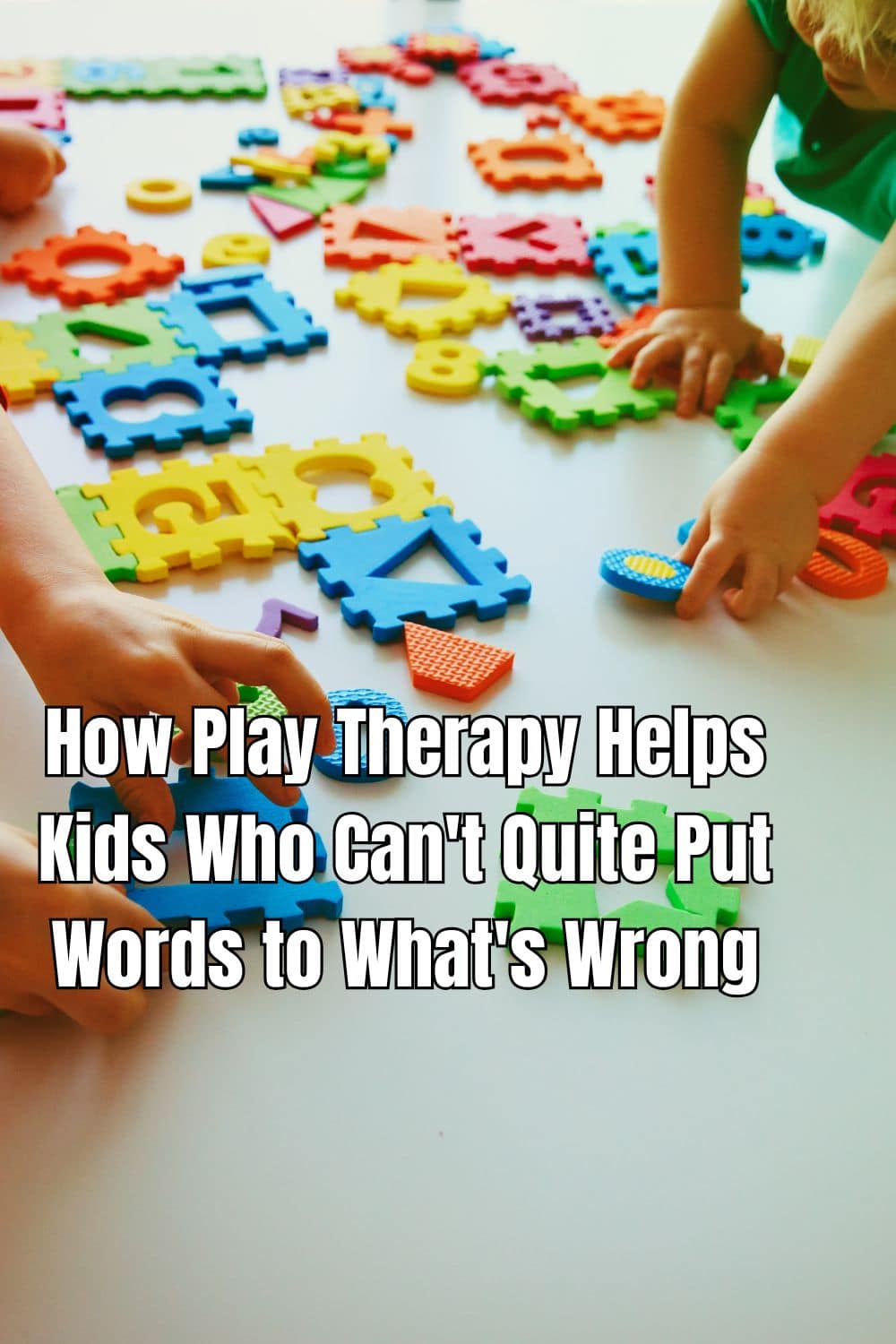
Big Feelings, Small Humans: How Play Therapy Helps Kids Who Can’t Quite Put Words to What’s Wrong
When my middle one was four, she went through a stretch where everything set her off. A sock seam. The wrong cup. Her brother breathing too loudly. My husband and I kept asking her what was wrong, and she kept saying “I don’t know,” which turned out to be the most honest answer a four-year-old could give. She didn’t know. She didn’t have the words yet. Her feelings were big, her vocabulary was small, and the gap between the two was showing up as meltdowns on the kitchen floor.
I think a lot of parents bump up against this wall. Kids have whole interior worlds going on by the time they’re two or three — fears, frustrations, jealousies, worries about things we don’t even realize they’ve absorbed — but they don’t have the language yet to explain any of it. So it comes out sideways. Through tantrums. Through clinginess. Through stomachaches that aren’t really stomachaches. Through the absolute meltdown over the blue bowl versus the green bowl. And as parents, we’re left trying to translate a language our kids haven’t fully learned to speak.
That’s the gap that play therapy is designed to close.
What Play Therapy Actually Is
The first time someone mentioned play therapy to me, I pictured a child sitting across from a therapist in a clinical room, talking about feelings. Which sounded absurd for a four-year-old, because that’s not how little kids process anything. Turns out that’s not what play therapy looks like at all.
Play therapy uses toys, art, sandtrays, puppets, and imaginative play as the language of the session. The child does what children naturally do — play — and a trained therapist watches, participates, and gently guides what’s unfolding. Because play is how kids already process the world, it bypasses the “explain your feelings with words” problem entirely. A child who can’t tell you they’re scared about the new baby might reenact the story twenty times with figurines until something shifts. A child who won’t discuss what happened at school might paint the same dark scribble for three weeks and then one day paint something lighter.
The therapist isn’t there to interpret every tower a child builds or every drawing they make. They’re there to create a safe, consistent space where a child’s inner world can come out — and where new emotional skills can be practiced in a way that sticks.
Who Actually Benefits From It
Play therapy isn’t just for kids going through something obviously big, like divorce or loss. It helps with a much wider range of things than most parents realize:
- Anxiety that shows up as clinginess, stomachaches, or trouble sleeping
- Big emotional outbursts that don’t fit the size of the trigger
- A new sibling, a move, a school change, or any major transition
- Trauma, grief, or witnessing something upsetting
- Behavioral shifts — regression in potty training, new fears, sudden aggression
- Neurodivergent kids who need support building emotional regulation skills
- Kids who seem fine but have a parent who senses something is off
That last one is the one I want to underline. You don’t need a diagnosis or a dramatic reason. If your gut is telling you your kid is struggling under the surface, that’s enough reason to explore extra support. I’ve talked to more than one mom who waited until a crisis to get help and wished she’d gone sooner.
What a Typical Session Looks Like
Most play therapy sessions run about 45 to 50 minutes. Kids enter a room that’s been set up with a deliberately curated selection of toys — not overwhelming, not picked by a five-year-old’s wishlist, but items that tend to invite emotional expression. Dolls, action figures, art supplies, puppets, building blocks, a sandtray. The child is usually told they can play with whatever they want, however they want, within a few simple rules about safety.
The therapist’s role is mostly observational at first. They’re noticing patterns. Does the child only play alone? Do certain toys get avoided? Do scary scenarios keep repeating? Is one doll always the victim? Over time, the therapist might start gently entering the play — asking what a character is feeling, offering a new possibility, modeling calm responses to distress. None of this is forced. The pace is the child’s.
Sessions usually happen weekly and, depending on the child and the reason for therapy, might run from a few months to a year or more. Parents are typically looped in regularly — not with a play-by-play of what the child said or did (confidentiality matters even for kids), but with a sense of what themes are emerging and how to support the work at home.
For parents looking into options, working with a play therapist often starts with a free consultation where you can ask questions and figure out whether it feels like a good fit before committing. Any decent therapy practice should make that easy — no pressure, no long intake before you’ve even decided.
What Parents Sometimes Get Wrong About It
A few things I hear that I think deserve pushback:
“My kid doesn’t need therapy, we talk about feelings at home.” That’s great, and keep doing it — but it’s a different thing. A parent is a safe, loved, complicated presence. A therapist is a neutral, trained, uninvolved presence. Kids sometimes need a space where they aren’t protecting their parent’s feelings, or performing for their parent’s approval, or working through their feelings about their parent. Both things can be true at once.
“I don’t want her to think something’s wrong with her.” Kids usually don’t frame it that way unless the adults around them do. Younger kids especially often love play therapy because it’s a room full of toys and someone whose whole job is to pay attention to them. Hard to sell them on “something’s wrong” when it feels like the opposite.
“It’s too expensive / we don’t have time.” This one’s real and it’s a legitimate barrier for a lot of families. Worth noting that many provinces and insurance plans cover at least partial therapy costs, many practices offer sliding scale fees, and some community organizations offer free or low-cost options. A short phone call to ask about cost before ruling it out is worth five minutes.
When to Actually Reach Out
Some rough signals that it’s worth at least a conversation with a therapist:
- A behavioral or emotional change that’s lasted more than a few weeks
- Sleep or appetite shifts you can’t attribute to anything physical
- Pulling away from things or people they used to love
- Physical complaints (stomach, head) with no medical cause
- Any trauma, loss, or big life disruption in the last year
- Your gut telling you something’s off, even if you can’t pinpoint it
Trust the gut one. I ignored it for too long with my daughter and wish I hadn’t. Getting her some outside support — someone who wasn’t me, wasn’t tangled in our family dynamic, and who had actual training in child development — turned out to be one of the better parenting decisions I’ve made. Not because it “fixed” her. Because it gave her tools she’ll have forever.
That’s really what play therapy offers at its best. Not a fix. A foundation.
Leave A Reply!