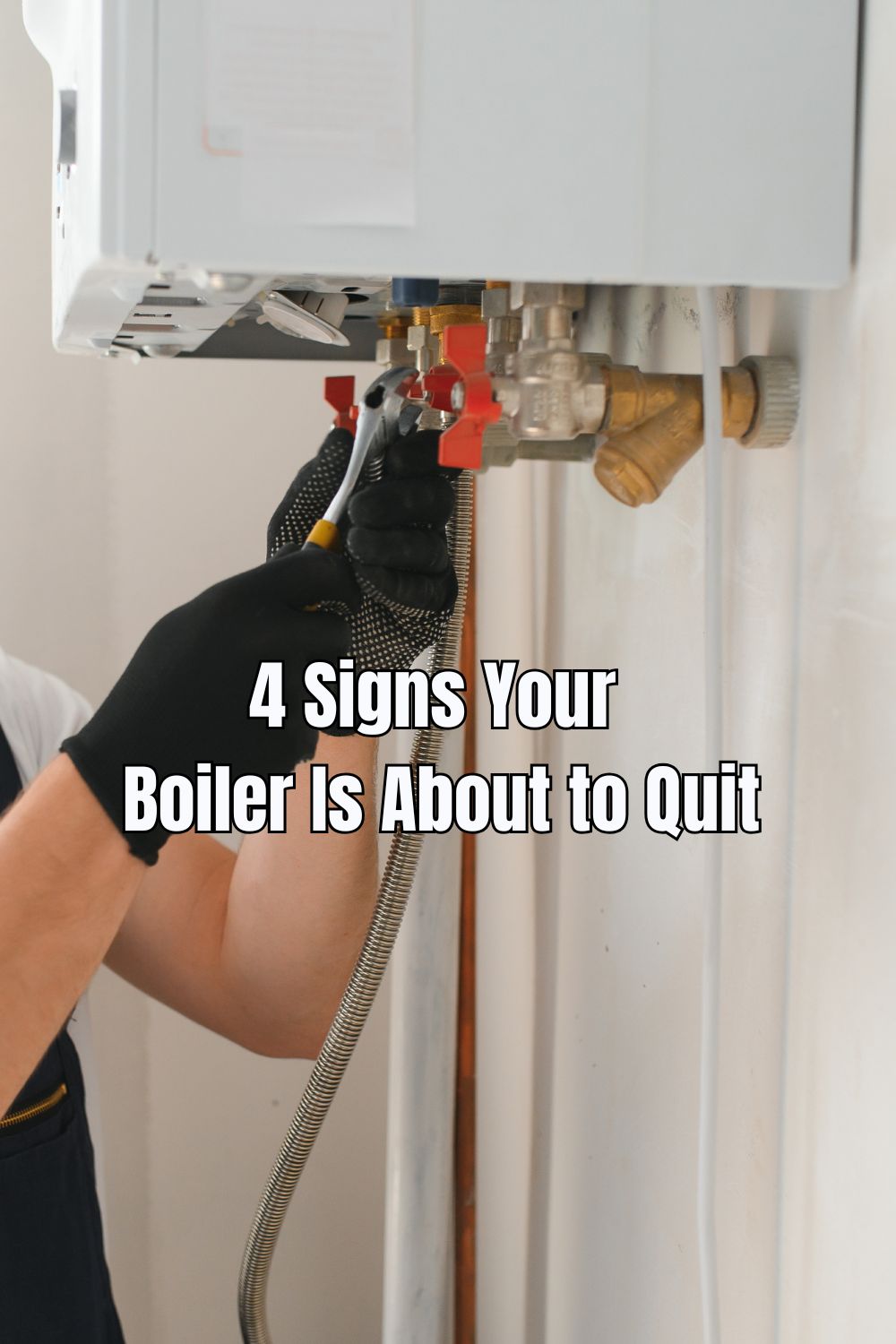
4 Signs Your Boiler Is About to Quit
Most boiler breakdowns don’t come out of nowhere. There’s usually a run of warning signs in the weeks before things go completely wrong, you just need to know what you’re looking for. Let’s get into it and see what your boiler might be trying to tell you.
Sign #1: Banging, Kettling or Clunking Noises
A boiler that’s working properly is a fairly quiet thing. So when it starts making banging, clunking or a low rumbling sound (often called kettling), it’s worth paying attention. Kettling in particular, that noise like a kettle coming to the boil, usually points to limescale or sludge building up inside the heat exchanger, which forces your boiler to work harder than it should.
Left alone, these noises tend to get worse over time. A Gas Safe engineer can assess whether a power flush or a part replacement will sort it, but if the boiler’s already old and struggling, it might be pushing towards the end of its life.
Sign #2: Lukewarm Radiators That Take Ages to Heat Up
If you’re noticing that your radiators take much longer to heat up than they used to, or that some of them are cold at the top and warm at the bottom, there are a few possible culprits. Sludge and magnetite build-up in the system is a common one, but a failing boiler that’s losing pressure consistently is another.
Before you start planning a new boiler installation, it’s worth getting an engineer to check whether a system flush or a simple repair will bring things back up to scratch. Sometimes it will. But if the boiler is losing pressure repeatedly and can’t maintain a steady output, replacement is often the more practical route.
Sign #3: Water Leaking Around the Boiler
Even a small leak around your boiler isn’t something to ignore. Water pooling underneath the unit or damp patches on the wall behind it can point to a corroded heat exchanger, a failed pressure relief valve, or worn seals, none of which tend to fix themselves.
Corrosion in particular is a serious sign that a boiler is reaching the end of its working life. It’s not always visible from the outside, but an engineer will usually spot it quickly. If the internal components are corroding, repairs can start to cost more than the boiler is worth.
Sign #4: Your Energy Bills Have Crept Up Without Explanation
Boilers lose efficiency as they age. If your gas bills have gone up noticeably over the past year or two, and your usage habits haven’t changed much, your boiler may be working harder than it needs to in order to produce the same amount of heat.
Older boilers often have an efficiency rating well below 80%, while modern A-rated condensing boilers typically operate at over 90%. That gap adds up over a full heating season, and it’s one of the reasons many families find that a replacement actually pays for itself over time.
What to Do If You’re Seeing These Signs
Spotting one of these warning signs doesn’t always mean your boiler is about to fail tomorrow. But a combination of two or more, especially in an older unit, is a good reason to get a professional opinion sooner rather than later.
Here’s a quick summary of the four signs to watch for:
- Unusual noises like banging, clunking or kettling
- Radiators that are slow to heat or unevenly warm
- Leaks or damp patches around the boiler
- Unexplained rises in your gas bills
Getting ahead of a boiler failure means you can plan the replacement on your own terms, instead of dealing with it in the middle of January when every engineer in your area is already booked up.
Leave A Reply!