Explore minimalist engagement rings: discover why less is more for the modern bride seeking confidence and timeless beauty.
Minimalist Engagement Rings: Why Less Is More for the Modern Bride
For a long time, the engagement ring conversation was pretty much just about size. Bigger diamond, bigger statement, bigger wow factor. But something has shifted — quietly at first, then everywhere at once. Across social media, in real life, and in the choices of brides who know exactly what they like, the minimalist engagement ring has become shorthand for a very specific kind of confidence. The kind that doesn’t need to shout.
And here’s the thing: this isn’t about spending less or settling. It’s about choosing differently — and if you’ve always been drawn to clean lines, considered accessories, and beauty that holds up across decades rather than just seasons, the case for going minimal is more compelling than you might think. And if you’ve always been drawn to clean lines, considered accessories, and beauty that holds up across decades rather than just seasons, the case for going minimal is more compelling than you might think.
What “Minimalist” Actually Means in Ring Design
Minimalist ring design isn’t a single aesthetic — it’s a philosophy. Strip away everything that isn’t essential, and what remains carries full weight. In jewellery terms, that usually means:
- Slim, refined bands in white gold, yellow gold, rose gold, or platinum — often 1.5mm to 2mm wide, rather than the chunkier styles that dominated earlier trends
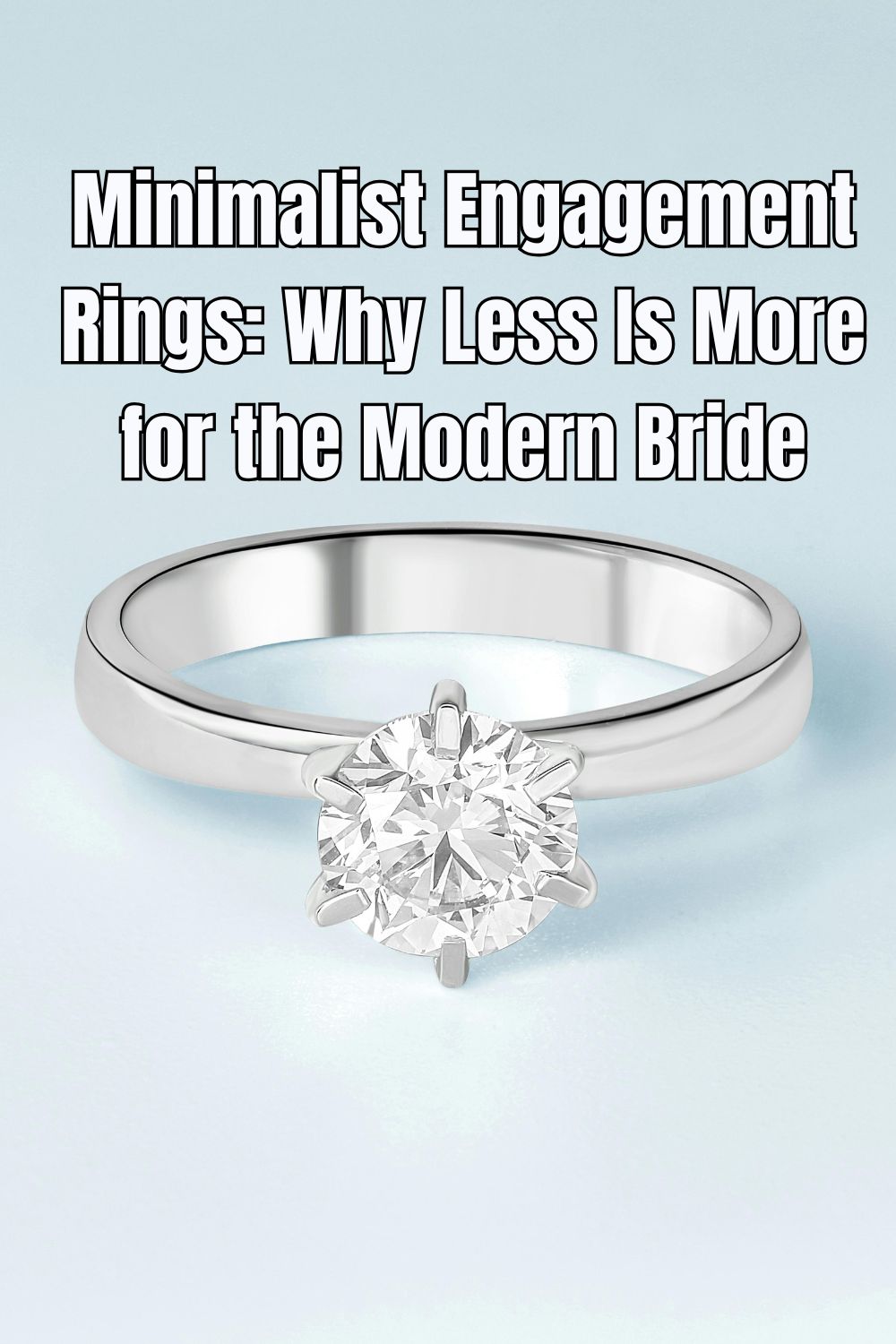
- Simple settings like a classic six-prong solitaire or a bezel that lets the stone breathe, rather than surrounding it with additional diamonds
- Single-stone designs where the centre stone is the clear focus — no side stones, no pavé band, no visual competition
- Shape choices that elongate rather than dominate — oval, pear, marquise, elongated cushion cuts all create elegance without requiring significant carat weight
None of these elements are new, exactly. The solitaire has been a staple for over a century. What’s changed is the meaning attached to it. Minimalism used to read as a budget compromise. Now it reads as a deliberate choice — and one that tends to wear better across time than the heavily ornamented alternatives.
Why the Minimalist Ring Trend Keeps Growing
The shift toward cleaner, quieter jewellery has been building for several years, and the data actually backs it up. According to The Knot’s annual jewellery survey, solitaire rings have consistently ranked as the most popular engagement ring style, with thin-band designs gaining ground steadily as brides prioritise longevity over maximalism.
The same survey found that more couples are choosing lab-grown diamonds specifically because the savings let them invest in better cut quality rather than just carat weight — which fits perfectly with the minimalist approach of letting one exceptional stone do all the work.
There’s a practical element to this too, and it’s more significant than it sounds. A thin-banded solitaire doesn’t snag on fabric. It stacks beautifully with a wedding band. It doesn’t need constant cleaning to maintain its visual impact. For brides who actually use their hands — which is most of us — a low-profile ring is genuinely more liveable day-to-day.
The Shapes That Work Best in Minimal Settings
Not every diamond cut translates equally well here. Round brilliants are the classic choice and genuinely difficult to fault — they maximise light return and look extraordinary in a simple four- or six-prong setting. But if you want a bit more personality while keeping things clean, a few shapes are worth considering specifically.
The oval has become the defining stone of this particular moment in jewellery. It reads longer and leaner than a round of equivalent carat weight, which creates an elegant visual effect without requiring a large stone. Pear shapes deliver something similar, with the added interest of a directional silhouette. Elongated cushion cuts are softer, more romantic — still minimalist, just warmer.
When you start browsing engagement rings with a minimalist brief in mind, filtering by solitaire settings and sorting by these elongated shapes is a useful starting point. Ritani’s lets you pair any of these cuts with a setting and metal combination before committing — genuinely useful when you’re trying to visualise how a thin white gold band actually reads against a 1.2-carat oval.
Metal Choice: Where Minimalism Gets Personal
In a maximalist ring, the metal is almost secondary — it’s a backdrop for everything else going on. In a minimalist ring, the band is doing real work. The weight, finish, and colour of the metal become significant.
White gold and platinum keep things crisp and contemporary — the band almost disappears, letting the stone float. Yellow gold adds warmth and a vintage undertone that feels very current right now. Rose gold sits between the two and is flattering on almost every skin tone.
Worth knowing: if you’re choosing between platinum and 18k white gold, platinum is the more durable long-term option and develops a natural patina that many wearers actively love. White gold requires periodic rhodium replating to maintain its bright finish — not a dealbreaker, just something to factor in.
Natural vs Lab-Grown: The Minimalist’s Calculation
One of the reasons minimalist rings have become more accessible is the rise of lab-grown diamonds. Chemically and optically identical to mined stones, lab-growns typically cost 40 to 70 percent less for equivalent quality — which means the minimalist priority of investing in the best possible cut grade becomes significantly more achievable without stretching the budget.
Ritani offers both natural and lab-grown diamonds with full GIA and IGI certification. That certification matters. Knowing exactly what you’re buying — cut grade, colour, clarity, all of it verified independently — makes the whole process feel considered rather than anxious. And that’s kind of the point of a minimalist approach in general.
The Stacking Question: Will It Work With a Wedding Band?
Short answer: yes, almost effortlessly. A slim solitaire on a thin band pairs with a curved contour wedding band, a plain metal band, an eternity band — whatever you want to add later. The engagement ring becomes a foundation for a flexible jewellery wardrobe rather than a fixed statement that everything else has to work around.
Heavily decorated rings — pavé bands, cluster settings, elaborate halos — can be genuinely difficult to pair without things looking cluttered. The minimalist ring sidesteps that entirely. You’ve got more options later, not fewer.
The Minimalist Ring Checklist: What to Focus On
When you start your search, keep this somewhere handy:
- Prioritise cut over carat. A well-cut 0.9ct stone outperforms a poorly cut 1.3ct at every angle — in person, in photos, everywhere.
- Solitaire or bezel setting. Both are clean, timeless, and contemporary. Bezel is more protective; prong settings show more of the stone.
- Thin band: 1.5–2mm. This is where the minimalist aesthetic lives. Wider and it starts to compete with the stone.
- Elongated shapes stretch the look. Oval, pear, marquise. They read larger and leaner than round at equal carat weight.
- Consider lab-grown for cut investment. The savings go straight into quality, not compromise.
- Buy certified only. GIA or IGI. Non-negotiable.
The Bottom Line
A minimalist ring is a commitment to something that will still feel exactly right in 20 years. Not because it’s safe — but because it was chosen with real intention rather than defaulting to what was expected.
Ritani’s free in-store preview option — design your ring online, then see it at a local partner jeweller before buying — is worth using if you want to be completely certain before committing. Seeing it in real light, on your hand, settles the question faster than any product photo.
Leave A Reply!