Before adopting a family cat, explore these 10 questions to ask to ensure the best fit for your home and lifestyle.
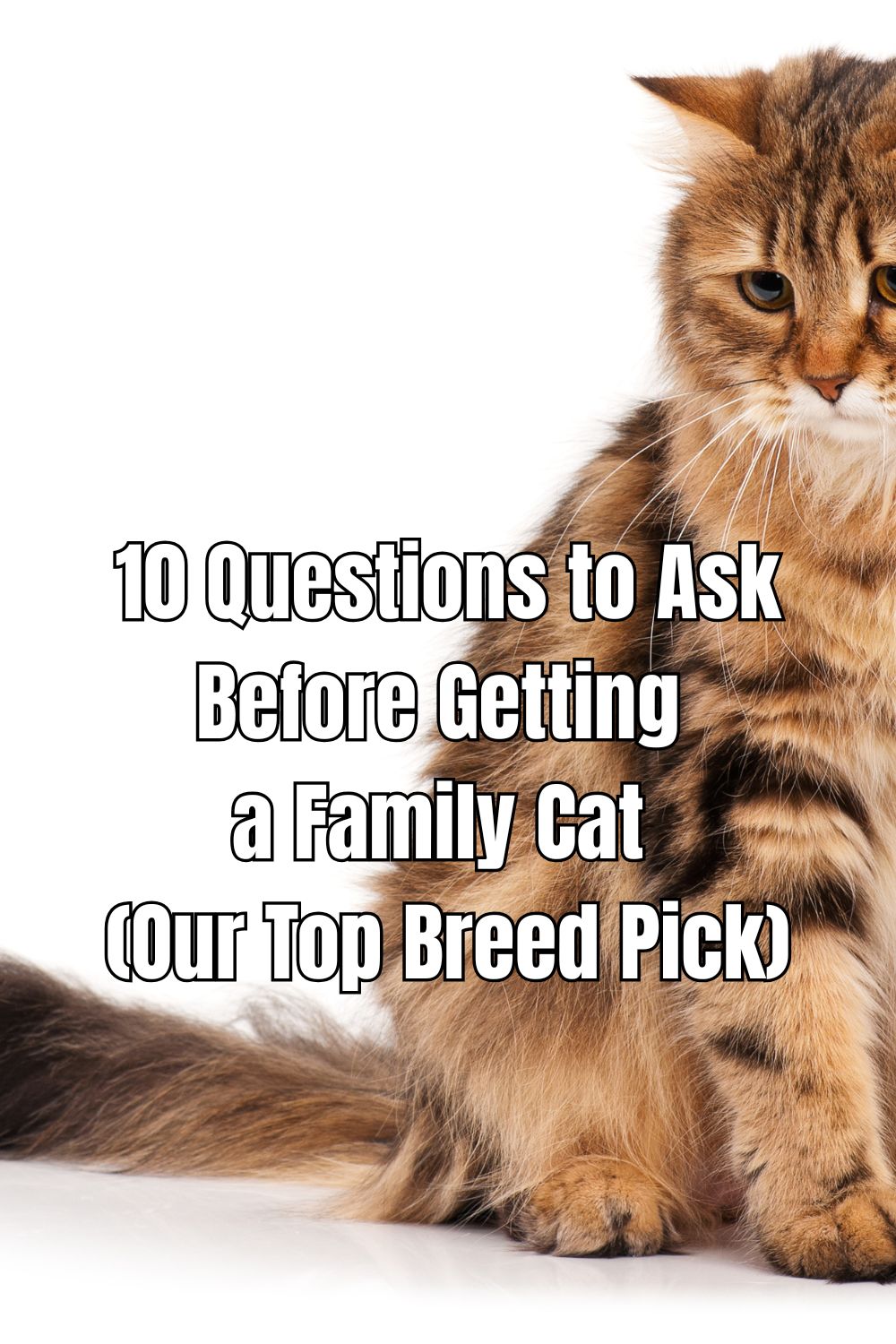
10 Questions to Ask Before Getting a Family Cat (+ Our Top Breed Pick!)
So your kids have been begging for a cat? It’s come up in a dozen dinners or on YouTube videos in the last 14 days, right? As a busy mom, I know just how much of a great addition a pet can be to a family. But before you commit to the long-term commitment of 15-20 years of owning a cat, there are some important questions to ask.
You don’t want to get a cat that isn’t the right fit for your family – trust me, it’s better to ask these before getting one than afterwards! Here are 10 questions every mom should ask before getting a family cat – and I’ll even share our top breed recommendation at the end!
- Is Our Family Ready for a Long-Term Commitment?
This is the big one. A cat can live 15 to 20 years. That is not a short-term responsibility. You will have to care for the cat through elementary school, maybe even through middle school, high school, and beyond. Make sure that all family members are genuinely interested in owning a cat.
Ask yourself: Are we prepared to care for this pet even when life gets busy, we go on vacation, or the kids lose interest?
- Does Anyone in Our Home Have Allergies?
Cat allergies are super common. Nothing is sadder than falling in love with a kitten only to discover that someone in the household is constantly sneezing. The allergens that trigger cat allergies are a protein called Fel d 1, which is found in a cat’s saliva and dander. Prior to committing to ownership of a cat, have the members of the family that suffer from allergies spend some time around cats to see how they react.
The good news is that some breeds of cats have lower levels of the Fel d 1 protein than others (more on our top pick below!).
Ask yourself: Has anyone in our household been tested for cat allergies, or do we need to do a test visit with a cat first?
- What’s Our Home Environment Like?
Cats have different personalities and needs, and some thrive in loud, lively households while others prefer calm, quiet spaces. If your home is full of running, screaming, laughing kids (no judgment — same!), you’ll want a breed that is adaptable and patient rather than easily stressed.
Ask yourself: Is our home generally calm or chaotic? Do we have the space for a cat to retreat and decompress when needed?
- How Much Time Can We Realistically Dedicate to a Pet?
Given the demands of school, sports activities, work and everything else you have to do, you might think you have a lot of time for a new pet. While cats are generally more independent than dogs, they still need your time to feed them, play with them, groom them (depending on their breed) and simply provide them with the attention that they require. Some breeds will require more interaction from their owners than others.
Ask yourself: Can we commit to at least 20–30 minutes of quality playtime and interaction daily?
- What Are the Costs Involved?
Cats are often thought of as low-cost pets compared to dogs, but the expenses add up quickly. Here’s a rough breakdown of what to budget for:
- Adoption/purchase fee: $50–$2,500 depending on breed and source
- Initial setup (litter box, food bowls, carrier, toys, scratching post): $150–$300
- Annual food costs: $300–$700+
- Vet care (annual checkups, vaccinations, unexpected illness): $200–$1,000+ per year
- Pet insurance: $20–$60/month (highly recommended!)
It’s always better to know the real numbers before you bring a pet home rather than be caught off guard.
Ask yourself: Have we budgeted realistically for both the upfront and ongoing costs of cat ownership?
- Are Our Kids Old Enough to Interact Safely with a Cat?
As with all pets, young children can end up accidentally hurting or provoking a kitten into reacting in ways that result in scratches or bites – and a stressed-out cat! Most experts suggest waiting for children under the age of five to interact with kittens, unless they choose a breed of kitten that is particularly tolerant and gentle with young children. Children between the ages of six and up tend to have a better understanding of boundaries and the care that is required for pets.
Ask yourself: Are our kids at an age where they can be taught to respect a cat’s space and signals?
- Do We Have Other Pets at Home?
If you already have a dog or another cat, the introduction process will be important for your pets. Some dog breeds are more social than others and will get along well with other pets when they are introduced to one another properly. Other breeds may be more territorial or stressed out by other pets in the household. Always research what breed you choose and how they typically get along with other animals.
Ask yourself: How will our current pets react, and are we prepared to do a slow, careful introduction?
- Who Will Be the Primary Caregiver?
Spoiler alert: it’s usually Mom. 😅 But it’s worth having an honest family conversation about this before bringing a cat home. Assigning age-appropriate responsibilities to kids — like filling the water bowl, scooping the litter, or brushing the cat — is a wonderful way to teach responsibility. Just be realistic about who the backup caregiver will be when the kids forget (because they will forget!).
Ask yourself: Have we assigned clear responsibilities so the care doesn’t fall entirely on one person?
- Are We Prepared for the Mess and Maintenance?
Even the most low-maintenance cats come with some level of mess — litter tracking, the occasional hairball, knocked-over water bowls, and scratched furniture. You can minimize these issues with the right setup (covered litter boxes, scratch posts, cat-friendly furniture protectors), but you can’t eliminate them entirely.
Ask yourself: Are we okay with some fur on the couch and a litter box in our home?
- Have We Researched Breeds to Find the Right Fit?
Not all cats are alike! Breed matters a lot when it comes to temperament, energy level, grooming needs, and how well a cat fits into family life. A little research goes a long way in making sure you find a cat that will thrive in your home — and that your family will absolutely adore.
Which brings me to the fun part — let’s talk breeds!
Great Cat Breeds for Families
Every family is different, so here’s a quick look at some popular breeds that tend to do well in busy homes with kids:
Maine Coon — Big, fluffy, and endlessly gentle, Maine Coons are often called the “dogs of the cat world.” They’re playful, sociable, and great with kids of all ages. The downside? That gorgeous coat needs regular brushing.
Ragdoll — True to their name, Ragdolls will go limp when you pick them up and will absolutely love to be held. Ragdolls are calm, very affectionate, and patient cats – perfect for younger children. However, Ragdolls are more dependent upon their owners and do not enjoy being left alone for long periods of time.
Birman — Sweet-natured and quietly affectionate, Birmans are gentle souls that bond closely with their families. They’re playful without being hyperactive, which works beautifully in a busy household.
Abyssinian — If your family is active and energetic, an Abyssinian will keep up! They’re curious, athletic, and love to play. They’re best suited for families with older kids who can match their energy.
Scottish Fold — Known for their adorably folded ears and round faces, Scottish Folds are laid-back, adaptable, and generally easy-going around kids and other pets.
All of these are wonderful options — but after researching dozens of cat breeds with busy family life in mind, one consistently rises to the very top of our list…
Our #1 Top Pick for Busy Families: The Russian Blue
After looking at everything from temperament to grooming needs to allergy-friendliness, the Russian Blue wins out for families — and here’s why.
They’re Calm, Gentle, and Loyal
Russian Blues are known for their sweet, even temperament. They’re affectionate with their family members without being overly demanding or clingy. They form deep bonds with the people they love and are known to follow their favorite human from room to room. They even have a naturally upturned mouth that gives them a subtle, permanent smile — pretty adorable, right?
They’re Great with Kids (Especially Older Ones)
Russian Blues do beautifully in homes with older, gentle children. These cats are patient and tolerant of children and will exhibit play behavior once they feel comfortable and safe in their environment with the children. Russian Blues are also not aggressive cats so they are good with children who are learning how to interact with pets.
They’re One of the Most Allergy-Friendly Breeds
If anyone in your family has mild cat allergies, a Russian Blue might be your answer. While no cat breed is truly 100% hypoallergenic, Russian Blues do produce less of the Fel d 1 protein found in a cat’s saliva and dander that can trigger allergies in sensitive individuals. Their dense coat sheds very lightly so there is significantly less dander in the home.
Final Thoughts
Getting a family cat is such a special decision, and going in prepared makes all the difference. By asking yourself these 10 questions — and doing a little research on the right breed — you’ll set your whole family up for a happy, successful experience with your new feline friend.
And if the Russian Blue keeps calling your name? Trust your instincts. This elegant, gentle, and loving breed has a way of becoming the absolute heart of a home.
Leave A Reply!