Learn what makes a hair transplant different about a curly, coily or afro hair transplant process for textured hair types.
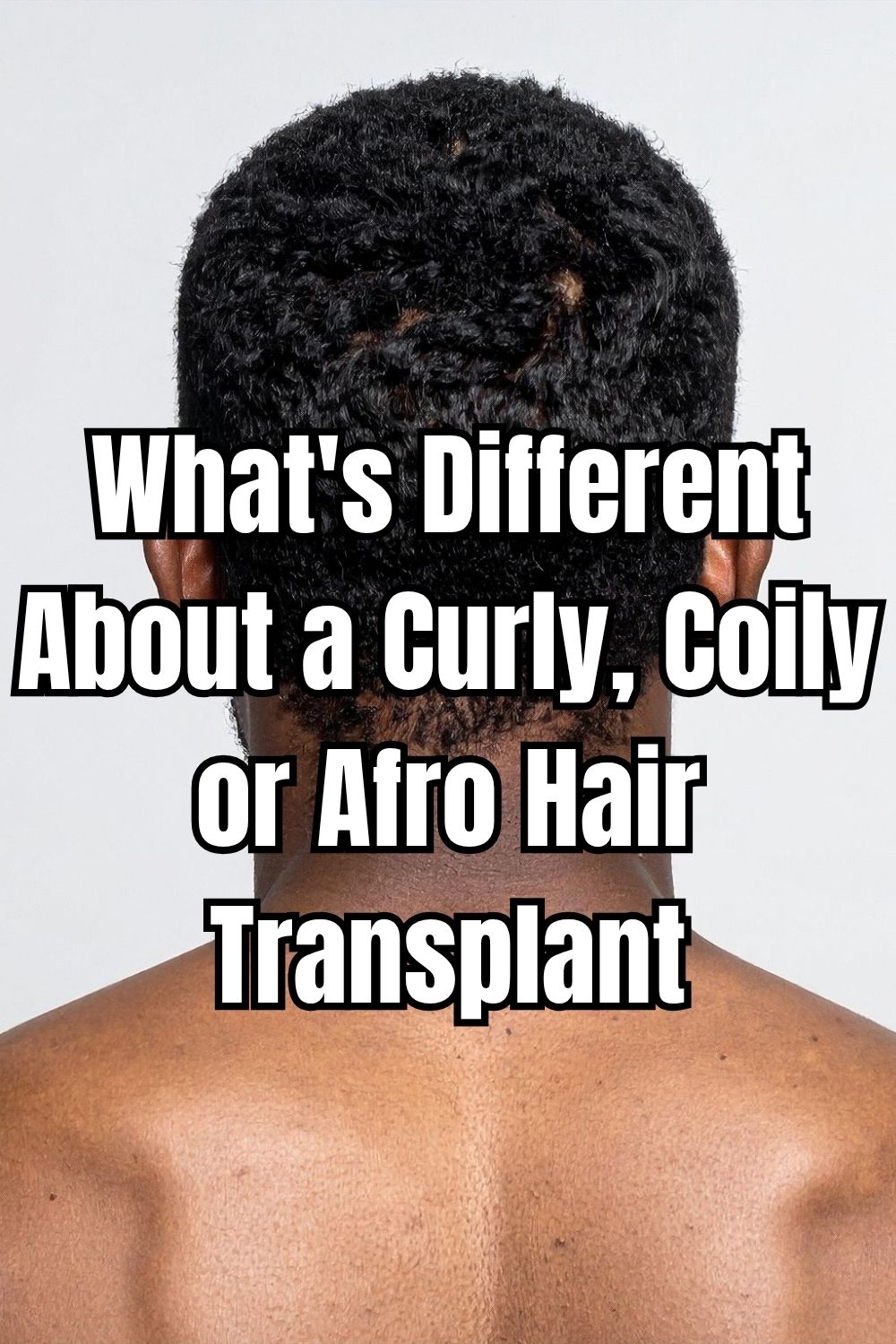
What’s Different About a Curly, Coily or Afro Hair Transplant
Hair transplants have become one of the most popular cosmetic procedures in the UK, with demand rising steadily year on year. But most of the information available online focuses on straight or slightly wavy hair types. For people with curly, coily or afro-textured hair, the process involves a very different set of considerations.
The structure of textured hair creates unique challenges at every stage, from extraction to implantation to healing. Here’s what you need to know about how the process works for textured hair types.
Why Hair Texture Changes Everything
The Shape Beneath the Surface
The key difference starts below the skin. Straight hair grows from follicles that sit relatively upright in the scalp, following a predictable vertical path. Curly and coily hair, on the other hand, grows from follicles that curve beneath the surface. The tighter the curl pattern, the more pronounced this curve tends to be.
This matters enormously during extraction. In a standard Follicular Unit Extraction (FUE) procedure, a surgeon uses a small punch tool to remove individual follicle units from the donor area. With straight hair, the punch can follow the follicle’s path fairly easily. With curved follicles, there’s a much higher risk of cutting into or damaging the graft during removal.
A damaged graft won’t survive transplantation. This means that without the right technique and experience, transection rates can be significantly higher in patients with afro-textured hair. Some studies have placed transection rates for curly hair FUE as high as 15 to 20 percent when performed by surgeons without specific experience in textured hair types.
Donor Area Considerations
People with afro-textured hair often have a slightly different donor area profile compared to those with straight hair. The hair density in the donor region at the back and sides of the scalp can vary, and the curly nature of the hair means that fewer grafts may be needed to achieve visual fullness.
This is actually one of the advantages of textured hair. Because curly and coily hair provides more volume and coverage per follicle, a skilled surgeon can sometimes achieve comparable results with fewer grafts. That said, fewer grafts does not mean a simpler procedure. The consultation stage is where this balance gets worked out, and reputable clinics like Treatment Rooms London offer tailored assessments that account for individual hair type and texture when planning graft numbers and donor area strategy.
The donor area also requires more careful handling. Over-harvesting from a smaller or less dense donor zone can lead to visible thinning, which is harder to conceal with shorter afro hair.
The Surgical Techniques That Make a Difference
Modified FUE for Textured Hair
To reduce transection rates, many surgeons now use modified FUE techniques specifically designed for curly and coily hair. These can include smaller punch sizes, adjusted angles of extraction, and sometimes a combination of sharp and dull punches to navigate the curved follicle path more safely.
Some practitioners will also use a technique where they score the surface layer of skin first before completing the extraction at a different depth. This two-step approach gives the surgeon more control and helps preserve the integrity of each graft.
The process tends to be slower than a standard FUE procedure. Surgeons working with textured hair often extract fewer grafts per hour to maintain precision, which can mean longer sessions or procedures spread across multiple days.
FUT as an Alternative
Follicular Unit Transplantation (FUT), which involves removing a strip of tissue from the donor area, can sometimes be a better option for patients with very tightly coiled hair. Because the follicles are removed as part of a larger strip, there’s less risk of individual follicle damage during extraction.
The trade-off is a linear scar in the donor area. For patients who keep their hair very short, this scar may be more visible. For those who maintain some length, it’s typically easy to conceal.
What to Expect During Recovery
Healing after a curly or afro hair transplant follows a broadly similar timeline to any FUE or FUT procedure, but there are some texture-specific factors to keep in mind:
- Ingrown hairs are more common during the healing phase, as the curly regrowth can become trapped beneath the skin
- Keloid scarring may be a concern for some patients, particularly those of African or Caribbean descent, and should be discussed during consultation
- Washing and aftercare routines will need to be adapted for natural hair, avoiding heavy products or manipulation during the first few weeks
- New growth patterns may take 12 to 18 months to fully establish, and the transplanted hair’s curl pattern can sometimes differ slightly from the surrounding hair initially
Following the surgeon’s aftercare guidance closely will make a significant difference to the final result. Most patients see noticeable improvement from around six months, with full results visible after a year or more.
Finding the Right Surgeon
Experience with textured hair should be a non-negotiable factor when choosing a surgeon. The techniques required are more specialised, and the margin for error during extraction is smaller. Patients should ask to see before and after examples specifically from clients with similar hair types.
It’s also worth checking whether the clinic uses up-to-date technology. Advances in punch tool design and motorised extraction systems have improved outcomes for curly and coily hair patients considerably in recent years.
A thorough consultation should cover hair density analysis, donor area assessment, expected graft numbers and a realistic discussion about outcomes. Surgeons who rush through this stage or offer generic advice regardless of hair type may not have the depth of experience needed.
The Big Picture
Hair transplant techniques have come a long way, but the industry still has some catching up to do when it comes to representing and serving people with curly, coily and afro hair. As awareness grows and more surgeons develop expertise in textured hair restoration, patients are gaining access to better results and more personalised care.
For anyone considering a transplant, the most important step is doing thorough research and finding a practitioner who truly understands the unique demands of working with textured hair. The right approach can deliver natural, lasting results that work with your hair’s natural pattern instead of against it.
Leave A Reply!