Explore smart choices for modern water heater installation, balancing efficiency, performance, and cost savings for your home.
Smart Choices for Modern Water Heater Installation
Key Takeaways
- New water heater models provide superior efficiency and control, lowering energy use and costs.
- Evaluating your home’s size and water consumption is crucial for selecting the optimal system.
- Government incentives and rebates are often available for energy-efficient upgrades, easing the upfront investment.
Choosing the right water heater for your home is both a practical and financial decision. With energy costs rising and advances in heating technology accelerating, homeowners are seeking solutions that balance performance, sustainability, and savings. Whether you’re planning an upgrade or a fresh install, understanding the latest in water heater installations in Ontario can help you maximize comfort while minimizing long-term costs.
Modern water heaters now offer an impressive array of features, from smart controls to minimal standby energy loss. As governments and utilities increase incentives for energy efficiency, installing an advanced water heater pays off even faster, offering real returns in both monthly utility bills and environmental impact. By grasping the key considerations for sizing, installation, and available rebates, you can enjoy reliable hot water without overextending your budget or energy usage.
Understanding Your Hot Water Needs
The first step to successfully upgrading your home’s water heater is to closely examine your household’s unique hot water requirements. Factors such as the number of family members, shower and bath frequency, dishwashing routines, and laundry habits contribute to daily demand levels. Peak usage, those moments when multiple appliances and taps require hot water, should guide your selection, ensuring the new system matches real-world needs without oversizing and inflating energy bills.
Exploring Energy-Efficient Options
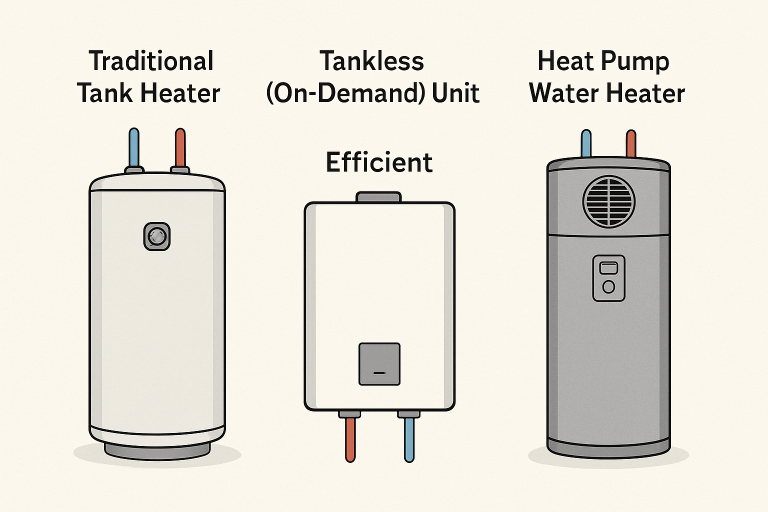
Homeowners are increasingly seeking out water heaters that blend energy efficiency with high performance. Two standouts in this field include heat pumps and tankless water heaters, each offering significant reductions in energy usage and impressive longevity.
Heat Pump Water Heaters
Heat pump water heaters extract heat from ambient air and transfer it to the water tank, making them several times more efficient than conventional models. These systems have gained significant traction, especially as utilities and local governments provide substantial incentives for efficient upgrades. Heat pump water heaters can be two to three times more energy efficient than conventional electric resistance water heaters, making them a compelling long-term investment for homeowners seeking maximum energy savings.
Tankless Water Heaters
Another innovative choice, tankless or on-demand water heaters, forgo the need to store hot water, instead heating water only when you turn on the tap. This not only eliminates standby energy losses but also provides an endless stream of hot water, ideal for bustling households. By avoiding continuous water heating, tankless models are recognized for their efficiency and space-saving design. Research from Consumer Reports finds that tankless models can be 24% to 34% more efficient for homes that use 41 gallons or less of hot water daily.
Incorporating Smart Technology
Smart technology has transformed the water heater market, enabling new levels of comfort, safety, and energy efficiency. Leading models come with Wi-Fi connectivity, enabling remote adjustments via smartphone apps. This gives homeowners the freedom to schedule temperature reductions during vacations or daily work hours, helping reduce energy use by 15-25% annually. In addition, many smart units offer usage monitoring, providing clear dashboards with insights into consumption habits. These features help households identify peak usage periods, optimize settings, and potentially save $8-15 per month by reducing unnecessary operation.
Proper Installation and Maintenance
Even the most advanced water heater will fall short if installed incorrectly. Key installation considerations include precise venting, proper electrical and water connections, and, most importantly, accurate sizing. Undersized units strain to keep up during peak times, while oversized heaters waste both energy and money. The “first-hour rating,” a standard guideline indicating how much hot water the unit can deliver in one hour of use, offers a reliable starting point for choosing the right capacity. Routine maintenance, such as yearly tank flushing and anode rod checks, can significantly extend equipment life and ensure sustained efficiency.
Financial Incentives and Rebates
Financial incentives can significantly offset the cost of installing high-efficiency water heaters. In the United States, a federal tax credit of up to $2,000 is available for homeowners who install a qualifying heat pump water heater by the end of 2025. This tax credit covers 30% of the installation cost and is part of ongoing government efforts to encourage smarter, more sustainable household choices. Local programs further reduce upfront costs. Homeowners are advised to consult local utility providers or government websites for up-to-date information on available programs.
Conclusion
Upgrading your water heater is a practical opportunity to boost your home’s efficiency, comfort, and long-term savings. By thoughtfully considering household needs, investigating advanced efficiency technologies, ensuring professional installation, and leveraging all available incentives, you can make the most out of your investment. The future of water heating is smarter, cleaner, and ready to support a sustainable lifestyle.
Leave A Reply!