Master your 6 month old baby sleep pattern! Learn schedules, routines, and tips for peaceful nights and restful naps. Get expert advice.
Sleep Like a Baby—Your 6-7 Month Old Sleep Schedule Explained
Understanding the Typical 6 Month Old Baby Sleep Pattern
At six months, your baby’s sleep patterns are undergoing significant maturation, moving towards a more adult-like structure. While newborns exhibit highly disorganized sleep, by this stage, babies are typically consolidating longer stretches of sleep at night and developing more predictable nap routines during the day. This shift is largely due to the development of their circadian rhythm, their internal body clock, which helps them distinguish between day and night.
A 6-month-old’s sleep cycles are still shorter than an adult’s, typically lasting around 40-50 minutes compared to an adult’s 90-minute cycle. This means they transition between sleep stages more frequently, making them more prone to brief awakenings. Babies cycle through two main types of sleep: active sleep (REM, or rapid eye movement) and quiet sleep (non-REM). Newborns spend a significant portion of their sleep in REM, which is crucial for brain development and memory formation. By six months, while REM sleep is still vital, the proportion of quiet, deeper sleep increases, allowing for more restorative rest. Understanding these fundamental aspects of infant sleep is key to supporting your baby’s developing sleep habits.
How Much Sleep Does a 6-Month-Old Need?
One of the most common questions parents have is about the total amount of sleep their 6-month-old needs. According to the National Sleep Foundation, most babies this age should sleep 12–16 hours a day within a 24-hour period. This total sleep duration is typically divided into a longer stretch at night and several naps during the day.
We generally recommend aiming for around 14 hours of total sleep daily for a 6-month-old. This usually looks like 11 – 12 hours of consolidated sleep at night, with brief awakenings, and approximately 2.5 – 3.5 hours during the day, split between naps. These are general guidelines, and individual variations are entirely normal. Just like adults, some babies naturally need a little more or a little less sleep.
To illustrate how sleep needs change as your baby grows, consider the following general comparison:

Naps, Wake Windows, and Bedtime
For a 6-month-old, establishing a consistent nap schedule and understanding appropriate wake windows are crucial for promoting healthy sleep.
Wake Windows: These are the periods your baby can comfortably stay awake between sleep periods without becoming overtired. For a 6-month-old, typical wake windows range between 2 and 3 hours. The first wake window of the day might be slightly shorter, while later wake windows can be a bit longer. Observing your baby’s sleepy cues (like yawning, eye-rubbing, or fussiness) is always more important than strictly adhering to the clock.
Naps: Most 6-month-old babies typically take 2-3 naps per day. Some may still be on a 3-nap schedule, while others might be transitioning to two longer naps. The average amount of daytime sleep for this age is about 3–4 hours.
- Nap Length: Individual naps can vary significantly. The first two naps of the day are often longer, ideally ranging from 60-90 minutes. The third nap, if your baby is still taking one, might be a shorter “catnap” of 30-45 minutes, intended to bridge the gap to bedtime without causing overtiredness. We generally recommend capping any single nap at 2 hours to ensure enough sleep pressure builds for nighttime sleep.
- Transitioning Naps: Babies might start moving towards a pattern of 2-3 daytime naps of up to 2 hours each. If your baby is consistently resisting a third nap or bedtime is becoming a struggle, they might be ready for the 2-nap transition, though this often happens closer to 7-8 months.
Bedtime: The ideal bedtime for a 6-month-old is typically between 7:00 and 8:00 pm. An early bedtime helps prevent overtiredness, which can paradoxically lead to more night wakings and earlier morning wake-ups. The last wake window before bedtime should usually be around 2.5-3 hours. A consistent bedtime is a powerful cue for your baby’s internal clock.
How Sleep Evolves from Birth to Six Months
The journey of infant sleep is one of constant evolution. Understanding how sleep patterns change from birth to 6 months can help set realistic expectations and appreciate your baby’s developmental progress:
- Birth to 3 Months (Newborn Sleep): Newborns sleep on and off through the day and night, from around 11 to 19 hours a day. Their sleep is highly disorganized, with no discernible pattern, and frequent awakenings for feeding. They spend roughly 50% of their sleep in active (REM) sleep.
- 3 to 6 Months (Consolidation and the 4-Month Shift): Around 3 months, babies might start to consolidate longer stretches of sleep at night, potentially sleeping for 4-5 hours at a time. The infamous 4-month sleep “regression” is not truly a regression but a permanent neurological maturation of sleep cycles. Babies begin to cycle through distinct light and deep sleep stages more like adults, leading to more frequent awakenings as they learn to connect these new cycles. At this stage, babies might sleep for a total of 10 to 18 hours. By 6 months, most babies are sleeping at night for 9 hours or longer, with brief awakenings. Their sleep patterns become more predictable, and they spend less time in REM sleep compared to newborns, with more time in quiet, restorative sleep.
This progression highlights that by 6 months, your baby’s sleep system is much more mature, paving the way for more consolidated and predictable sleep patterns, though still subject to developmental influences.
Navigating Common Sleep Disruptions at 6 Months
While the 6-month mark often brings more predictable sleep, it’s also a period of immense growth and development, which can, paradoxically, lead to temporary sleep disruptions. Understanding these common challenges can help parents respond effectively and maintain healthy sleep habits.
Why Your 6 Month Old Baby Sleep Pattern Might Suddenly Change
Many parents observe a sudden shift in their 6-month-old’s sleep, often referred to as the “6-month sleep regression.” However, it’s more accurately described as a developmental progression or a period of adjustment. These changes are often linked to significant growth spurts and exciting new skills your baby is acquiring:
- Developmental Leaps: At 6 months, babies are typically mastering new motor skills like rolling from back to belly and belly to back, sitting up independently, and some may even begin to crawl or pull to stand. These new abilities are incredibly exciting for your baby, and they often want to practice them constantly – even in their sleep space! You might find your baby sitting up in their crib, or rolling around, rather than settling down.

- Separation Anxiety: Around 6-8 months, separation anxiety commonly emerges. Your baby is developing object permanence, meaning they understand that you still exist even when you’re not in sight. This can lead to increased fussiness or crying when you leave the room, especially at bedtime or during night wakings. They may genuinely miss you and need reassurance.
- Increased Awareness and Distractibility: Your 6-month-old is much more aware of their surroundings. This can lead to distracted feedings during the day, meaning they might not be getting enough calories, which can then lead to increased hunger at night.
Recognizing these developmental drivers behind sleep changes can help parents approach disruptions with patience and understanding, rather than viewing them as setbacks.
Night Wakings and Feedings
Even with more consolidated sleep patterns, it’s still entirely normal for a 6-month-old to wake up at night. The key is understanding why and how to respond.
- Linking Sleep Cycles: As mentioned, babies’ sleep cycles are shorter. They may wake briefly between cycles and need to practice self-soothing skills to fall back asleep independently. If they rely on a parent to fall asleep at bedtime (e.g., being rocked, fed to sleep), they may struggle to connect sleep cycles on their own during the night.
- Night Feeding Needs: While some 6-month-olds are capable of sleeping through the night without feeds, it’s still common for many babies to have 1-2 night feedings at this age. Whether your baby still needs night feeds depends on various factors, including their weight gain, overall caloric intake during the day, and feeding method.
- Formula-fed babies can typically be weaned from night feedings around 6 months, provided they are getting sufficient calories during the day and their pediatrician approves.
- Breastfed babies often continue night feedings closer to 12 months, as breast milk is digested more quickly, and nursing provides comfort and maintains milk supply.
- Pediatrician Consultation: If you’re unsure whether your baby still needs night feeds, or if their night wakings are excessive and impacting their daytime demeanor or weight gain, always consult your pediatrician. They can provide personalized advice based on your baby’s individual health and development.
Strategies for a More Restful Night
Achieving more restful nights for your 6-month-old involves a combination of consistency, patience, and creating an optimal sleep environment. It’s about setting your baby up for success and supporting their natural ability to sleep.
Creating a Consistent Bedtime Routine
A consistent bedtime routine is a powerful cue for your baby’s brain, signaling that it’s time to wind down and prepare for sleep. It helps regulate their circadian rhythm and can significantly improve sleep onset and duration. We recommend a routine of 20-30 minutes, performed in the same order each night:
- Warm Bath: A relaxing bath can help your baby unwind and regulate their body temperature for sleep.
- Gentle Massage: A light massage can be incredibly soothing and help release tension.
- Quiet Play or Reading: Engage in calm, low-stimulation activities. Reading a book is a wonderful way to bond and calm your baby.

- Lullabies or Soft Music: Singing or playing gentle music can be a comforting part of the routine.
- Dim Lighting: Begin dimming the lights in your baby’s room an hour before bedtime to promote melatonin production.
- Feeding: Offer the last feeding of the day as part of the routine, ideally before the final step of putting them in the crib, to avoid creating a “feed to sleep” association.
Consistency is key; even on nights when you’re away from home, try to replicate as much of the routine as possible.
Safe Sleep Practices for Your Baby
Ensuring a safe sleep environment is paramount for your baby’s well-being. The American Academy of Pediatrics (AAP) provides clear guidelines to reduce the risk of Sudden Infant Death Syndrome (SIDS) and other sleep-related infant deaths:
- Back to Sleep: Always place your baby on their back for every sleep, whether it’s for naps or nighttime. The AAP recommends placing babies on their back in their sleep space until 12 months.
- Firm, Flat Sleep Surface: Your baby should sleep on a firm, flat, non-inclined surface, such as in a crib, bassinet, or play yard that meets current safety standards.
- Empty Crib: Keep the sleep area free from loose items. This means no blankets, pillows, bumper pads, stuffed animals, or other soft objects. Use a sleep sack or wearable blanket for warmth.

- Room-Sharing, Not Bed-Sharing: The AAP recommends room-sharing without bed-sharing until the first birthday or at least 6 months, as this significantly reduces the risk of SIDS. Your baby should sleep in your room, close to your bed, but in their own separate sleep space.
- Appropriate Sleep Clothing: Dress your baby in sleep clothing appropriate for the room temperature to prevent overheating. Avoid covering their head during sleep. The ideal room temperature for sleep is 68-72°F (20-22°C).
By adhering to these safe sleep practices, you provide your baby with the safest possible environment for restful sleep.
Encouraging Independent Sleep and Sleep Training
By 6 months, many babies are developmentally ready to learn independent sleep skills. This means they can fall asleep on their own at bedtime and resettle themselves during brief night wakings without parental intervention.
- Drowsy But Awake: A foundational principle is to put your baby down in their crib drowsy but still awake. This gives them the opportunity to practice falling asleep independently from the very beginning.
- When to Consider Sleep Training: Babies can be developmentally ready for sleep training around 5 months, but 6 months is often considered an ideal time, as their circadian rhythm is more established, and they are typically past the peak of the 4-month sleep maturation. The best time to start is when you, as parents, feel it is right for your family and you are ready to be consistent.
- Methods of Sleep Training: There are various approaches to sleep training, ranging from very gentle to more structured:
- Gentle Methods (Fading, Chair Method): These involve gradually reducing parental presence or intervention over time. The “Fading” method involves slowly decreasing the amount of help you give your baby to fall asleep. The “Chair Method” involves sitting by the crib and gradually moving your chair further away each night. These methods typically involve less crying but may take longer to show results.
- Crying Methods (Ferber Method): These methods involve allowing your baby to cry for progressively longer intervals before offering comfort. The Ferber Method (also known as “graduated extinction”) involves checking on your baby at increasing intervals, reassuring them verbally but not picking them up. While often quicker, these methods can be more challenging for parents due to the crying involved.
No matter which method you choose, consistency is paramount. Most families see progress within 3–7 nights of consistent sleep training. For a more detailed exploration of different approaches and how to implement them, you might find a comprehensive sleep schedule guide helpful as you steer this important step.
Optimizing the Sleep Environment with Modern Aids
Beyond routines and safe practices, the physical sleep environment plays a significant role in promoting restful sleep for your 6-month-old.
- Darkness: Use blackout curtains or blinds to make your baby’s room as dark as possible, even for naps. Darkness signals to the brain that it’s nighttime and helps stimulate melatonin production.
- Temperature: Maintain the room temperature between 68-72°F (20-22°C). Overheating is a SIDS risk factor and can disrupt sleep.
- White Noise: A safe white noise machine can block out household noises, create a consistent sleep environment, and mimic the sounds of the womb. Ensure the machine is placed at least 7 feet away from the crib, kept at a low decibel level (no louder than a running shower), and played continuously throughout sleep periods.
- Rhythmic Tapping Devices: Some parents find rhythmic tapping devices or shushers helpful, as they simulate the soothing sounds and rhythms babies experienced in the womb. When used safely and appropriately, these can be part of a calming sleep routine.
- Avoiding Unsafe Products: Be wary of products that claim to be sleep aids but are not recommended by safety organizations (e.g., sleep positioners, weighted blankets/swaddles, or monitors that claim to detect heart rate/breathing as a means to prevent SIDS). Always prioritize AAP guidelines for safe sleep.
Frequently Asked Questions about Your 6-Month-Old’s Sleep
We often hear similar questions from parents navigating their 6-month-old’s sleep. Here are some common concerns addressed:
What does a healthy 6 month old baby sleep pattern look like in a sample schedule?
While every baby is unique and flexibility is key, a healthy 6-month-old sleep pattern typically follows a general rhythm. Here’s a sample schedule to give you an idea, but remember to adjust it based on your baby’s individual cues and needs:
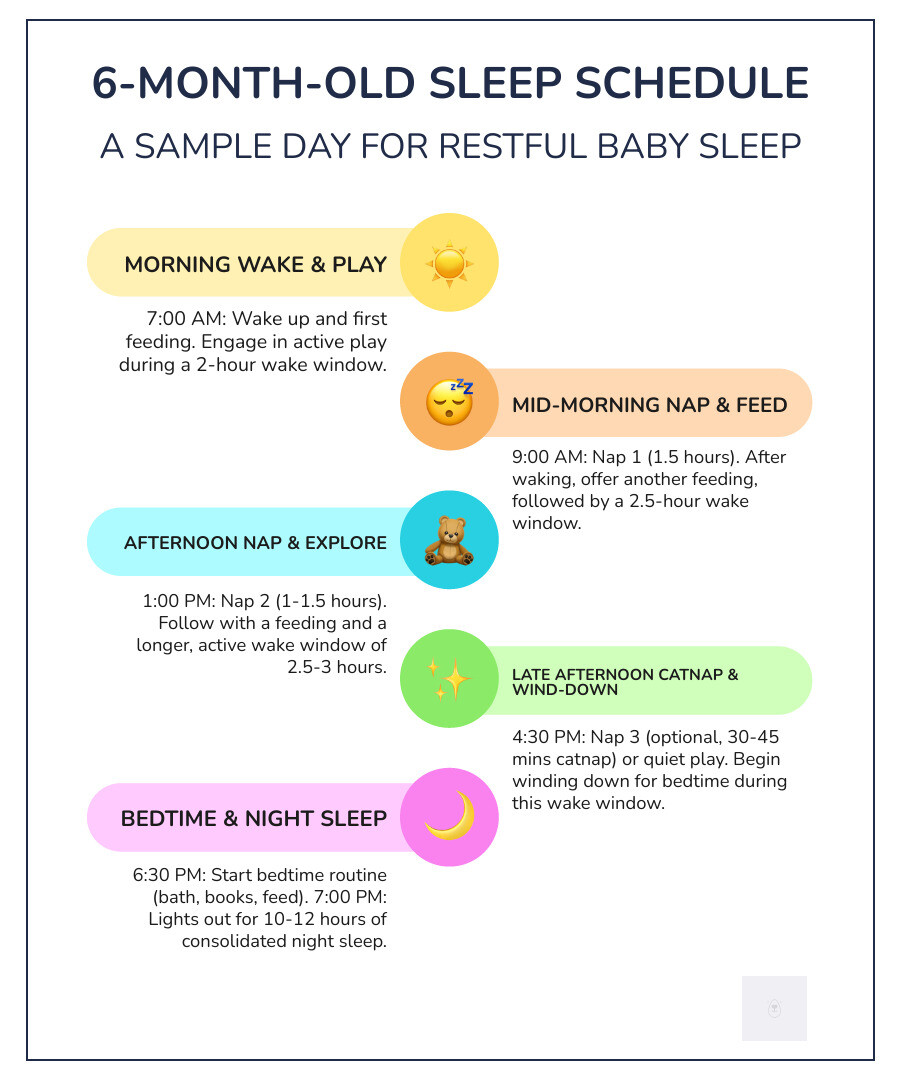
Sample 3-Nap Schedule:
- 7:00 AM: Wake up, feeding
- 7:00 AM – 9:00 AM: Wake window 1 (2 hours)
- 9:00 AM – 10:30 AM: Nap 1 (1.5 hours), followed by feeding
- 10:30 AM – 1:00 PM: Wake window 2 (2.5 hours), including solids (if introduced)
- 1:00 PM – 2:30 PM: Nap 2 (1.5 hours), followed by feeding
- 2:30 PM – 5:00 PM: Wake window 3 (2.5 hours), including quiet play
- 5:00 PM – 5:45 PM: Nap 3 (45 minutes – a “catnap”), if needed, followed by feeding
- 5:45 PM – 7:00 PM: Final wake window (1 hour 15 minutes – 2 hours), start bedtime routine
- 7:00 PM – 7:30 PM: Bedtime routine (bath, massage, book, quiet time)
- 7:30 PM: In crib, asleep for the night
- Overnight: Potential for 1-2 night feedings, typically between 12:00 AM – 4:00 AM, gradually reducing as baby consolidates sleep.
This is a guide, not a strict rule. Focus on consistent wake-up times, age-appropriate wake windows, and observing your baby’s sleepy cues.
Is it okay for my 6-month-old to sleep on their stomach?
The American Academy of Pediatrics (AAP) strongly recommends always placing your baby on their back to sleep for every sleep until they are 1 year old. This is the safest position and significantly reduces the risk of SIDS.
However, once your 6-month-old can consistently roll from their back to their stomach and from their stomach to their back on their own, you do not need to reposition them if they roll over during sleep. They have developed the muscle strength and coordination to get themselves out of a potentially unsafe position. Always ensure they are placed on their back initially, and that their sleep environment remains safe (firm, flat surface, no loose bedding).
When should I be concerned and contact a doctor about my baby’s sleep?
While variations in infant sleep are normal, there are times when it’s appropriate to seek professional advice. We recommend contacting your pediatrician if you observe any of the following:
- Excessive Fussiness or Irritability: If your baby seems consistently overtired, irritable, or unusually fussy during their wake windows, despite your best efforts to establish good sleep habits.
- Breathing Concerns: If your baby snores loudly, struggles to breathe during sleep, or has frequent pauses in breathing (apnea).
- Poor Weight Gain: If your baby is not gaining weight appropriately, which might indicate insufficient caloric intake during the day due to excessive sleep or underlying issues.
- Significant Parental Distress: If your baby’s sleep challenges are causing extreme exhaustion, anxiety, or impacting your mental health or ability to care for your baby. Your well-being matters too.
- Sudden, Unexplained Changes: If there’s a sudden and drastic change in your baby’s sleep patterns that doesn’t seem linked to developmental milestones, illness, or teething.
Always trust your parental intuition. If something feels off, or you have persistent concerns, a conversation with your pediatrician can provide reassurance and guidance.
Conclusion: Embracing Flexibility on the Path to Better Sleep
Navigating your 6-month-old’s sleep patterns can feel like a complex journey, but with understanding and consistent strategies, you can foster healthy sleep habits for your little one. We’ve explored the typical sleep needs, the importance of wake windows and naps, and how developmental milestones can influence sleep. We’ve also provided actionable strategies for creating a conducive sleep environment, establishing a calming bedtime routine, and considering independent sleep skills.
Every baby is unique, and there’s a wide range of normal when it comes to infant sleep. What works for one family may not work for another, and flexibility is paramount. The goal isn’t perfection, but progress. By focusing on consistency, patience, and responding to your baby’s individual cues, you are laying a strong foundation for a lifetime of healthy sleep. You’re doing a fantastic job, and with continued dedication, more restful nights are within reach for your entire family.
Leave A Reply!