Identify signs your roof needs repair early to avoid costly damage and maintain your home’s safety and energy efficiency.

Signs Your Roof Needs Repair Before It’s Too Late
Key Takeaways
- Your roof is a critical barrier against weather and environmental damage, making regular inspections and maintenance essential.
- Missing or damaged shingles, water stains, sagging decks, and granules in gutters are early warning signs that require prompt attention.
- Mold, moss, and algae growth, as well as visible light, in the attic indicate moisture problems and potential structural issues.
- Increased energy bills or an aging roof may signal inefficiencies or hidden damage that professional inspection can address.
- Timely repairs, preventive maintenance, and consulting a professional roofing contractor help preserve home value, safety, and energy efficiency.
Introduction
Your roof shields your family and belongings from rain, wind, and sun, making it one of the most important components of your home’s structure. Over time, roofs can deteriorate, but identifying warning signs early can prevent extensive and costly damage. Having a well-maintained roof not only improves your home’s safety and comfort but also maintains its value. If you’re considering professional help, you can learn more about roof installation services to ensure expert care and expert installation work that meets your home’s unique needs.
Routine inspections and timely repairs can save you money, help you avoid unexpected emergencies, and extend the lifespan of your entire roofing system. Knowing which signs to look for allows you to take action before small issues become big headaches and costly fixes.
Missing or Damaged Shingles
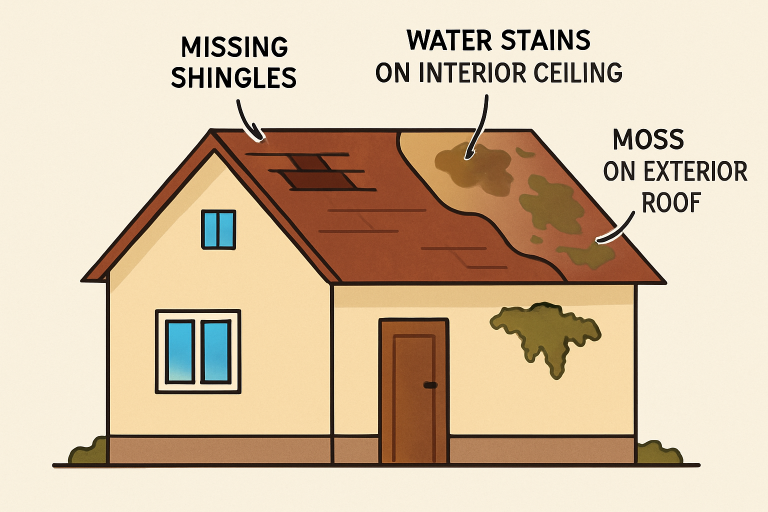
Shingles are your roof’s first barrier against water leaks and weather damage. If you notice shingles that are cracked, curling, buckling, or missing altogether, your roof’s waterproof layer could be compromised. Hailstorms, high winds, and severe weather can dislodge shingles from your roof, leaving vulnerable patches behind. Ignoring damaged shingles risks moisture intrusion—and what might start as a small leak can develop into widespread water damage throughout your home, causing rot and costly repairs. For homeowners in the area, timely Kirkland roof repair can help prevent minor shingle issues from turning into major structural problems while protecting your home’s long-term value.
Water Stains on Ceilings or Walls
One of the most telling signs of a roof problem is discoloration or staining on your ceiling or interior walls. These water stains are typically brown or yellow and serve as a direct indication that moisture is penetrating your roof’s protective barrier. It’s crucial to address these signs early, as even a small stain can be an early warning of a much larger problem, such as mold growth, insulation damage, or structural decay, hiding in your attic or wall cavities. Catching water stains when they first appear can help you prevent major structural issues in your home.
Sagging Roof Deck
A drooping or sagging roof is a serious structural red flag. This can be caused by long-term water damage, insufficient support, or failing roofing materials. Not only does this issue impact your home’s curb appeal, but it also presents a real safety risk as structural integrity is compromised. If left unchecked, sections of the roof deck may collapse, resulting in costly emergency repairs. Always inspect your roofline from the ground for sagging or wavy areas, especially after significant storms.
Granules in Gutters
Asphalt shingles are coated with tiny granules to protect them from the sun’s ultraviolet rays and to add a layer of fire resistance. Over time, these granules can wear away due to age or weathering and often accumulate in your gutters. If you notice an abnormal amount of shingle granules in your gutters or downspouts, it’s a clear sign that your shingles are aging and losing their effectiveness. Deteriorating shingles provide less protection, leaving your roof vulnerable to leaks and heat damage.
Mold, Moss, or Algae Growth
Organic growth, such as moss, algae, or mold, on your roof’s surface can indicate persistent moisture problems. Moss and algae trap moisture against the roof, hastening shingle deterioration, while mold inside the attic or on rafters can signal poor ventilation or ongoing leaks. Removing these growths promptly and fixing the source of moisture can prevent widespread roof damage and improve air quality inside your home.
Increased Energy Bills
Unexpected increases in your heating or cooling bills could signal trouble overhead. If your home starts to feel drafty or it becomes difficult to maintain indoor temperatures, your roof may not be properly insulating your home. Poor insulation and ventilation, as well as gaps created by missing shingles, can all contribute to energy loss. Addressing these problems helps improve your home’s energy efficiency and reduces your utility costs.
Visible Light in the Attic
If you venture into your attic during daylight hours and spot rays of light streaming through the roof boards, this is a clear sign of holes, cracks, or missing shingles. Any points where daylight gets through can allow water, pests, and cold air into your home. Check your attic regularly for breaches in roofing material, especially after big storms or strong winds.
Age of the Roof
All roofing materials have an expected lifespan, typically 20-25 years for asphalt shingle roofs. If you know your roof is nearing or exceeding this age—even if there’s no obvious damage—schedule a professional inspection. Age alone increases the chance of hidden weaknesses that might become severe at any time. Proactive maintenance and timely replacement help keep your home protected throughout the year.
Final Thoughts
Protecting your home starts at the top. Regular inspections, timely repairs, and ongoing preventative maintenance are essential for a durable and efficient roof. Noticing any of these warning signs means it’s time to consult a professional roofing contractor and take proactive steps to preserve your home’s value and peace of mind.
Leave A Reply!