Learn how to spot authentic ancient Egyptian pieces when investing, ensuring you avoid replicas and misidentified artifacts.
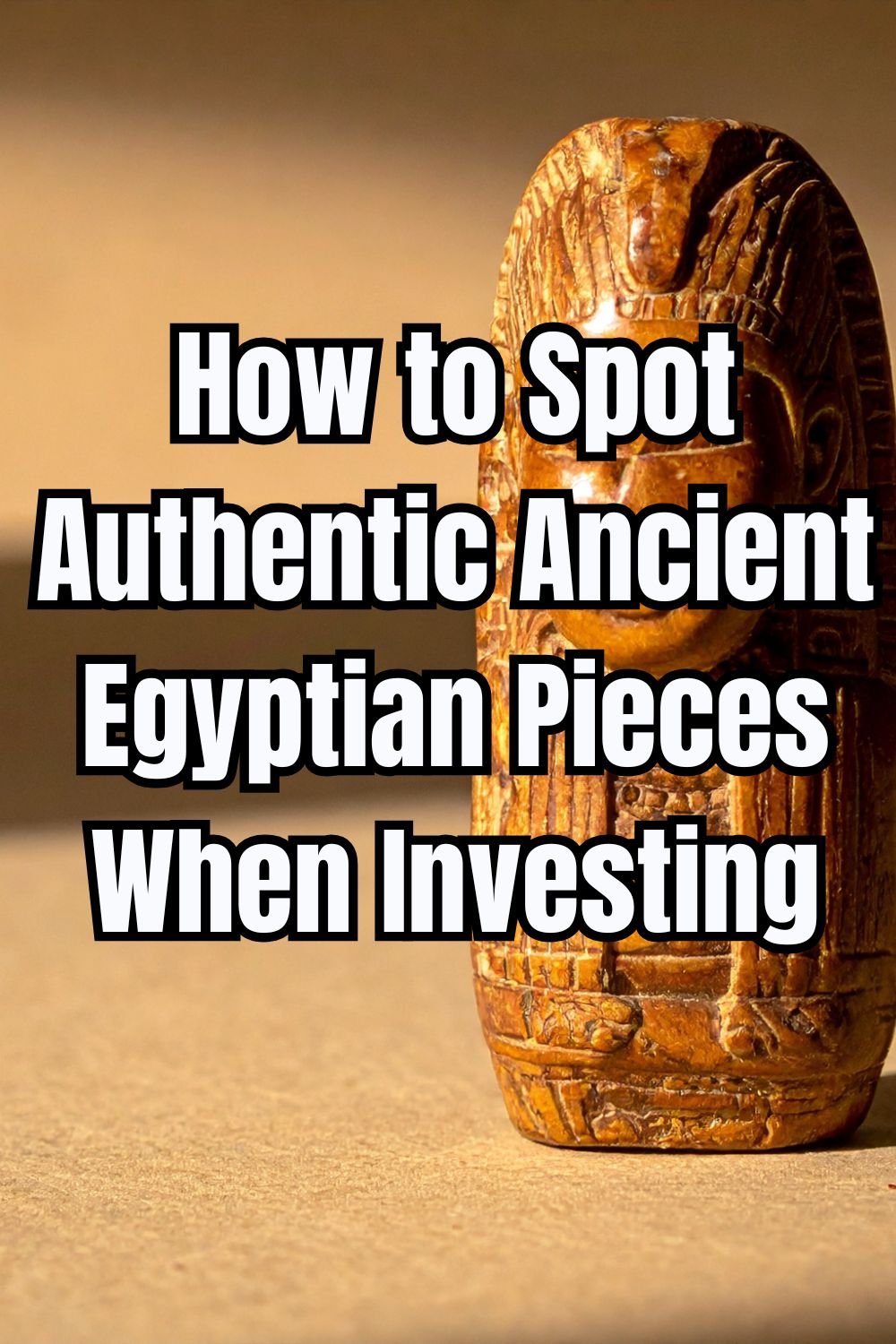
How to Spot Authentic Ancient Egyptian Pieces When Investing
Collecting historical objects has always fascinated people, but few categories attract more curiosity — or more risk — than artifacts from ancient Egypt. The global market for antiquities has grown steadily over the past decade, and with that growth comes a wave of replicas, misidentified items, and sellers who might not fully understand the origins of what they’re offering.
For anyone considering an investment in Egyptian antiquities, the challenge is simple: spotting what’s authentic without getting swept up in beautifully crafted imitations.
Ancient Egypt left behind thousands of years of material culture, from everyday household items to temple reliefs. Many of these pieces were carefully preserved in dry desert climates, which is part of why the category is so desirable today. But this same abundance has also inspired a long history of counterfeiting, so learning how to identify the real things is essential.
Below is a practical, grounded guide for investors, historians-at-heart, and anyone who feels drawn to the world of pharaohs, mummies, and symbolic craftsmanship.
Learn the Materials Used in Real Egyptian Artifacts
Authentic Egyptian objects weren’t made from random materials. They followed patterns shaped by geography, religion, and available resources.
Stone — especially limestone, sandstone, granite, and alabaster — was widely used for statues, stelae, jars, and funerary items. Faience, a non-clay ceramic with a blue-green glaze, was extremely common for amulets and small figurines. Wood, though less durable, appeared in boxes, figurines, and coffin fragments, often coated with pigments or plaster.
A genuine piece usually shows age-appropriate wear: mineral deposits in crevices, softened tool marks, or pigment that has faded but not chipped off in a “too perfect” way.
Modern replicas often feel too smooth or artificially aged, with repetitive tool marks or paint that flakes unnaturally. If the surface looks like it was sanded yesterday, that’s a red flag.
Check for Historical Accuracy in Symbolism and Style
Ancient Egyptian art followed surprisingly strict rules. Proportions, postures, and hieroglyphic arrangements stayed consistent for centuries.
Human figures were typically shown in a composite view — torso facing forward, head and legs in profile. Gods and goddesses were represented with consistent attributes: Anubis with a jackal head, Horus with a falcon head, Hathor with cow horns and sun disk. Hieroglyphs followed structured alignment rather than random placement.
If an object puts symbols together in ways that don’t match any known era — such as mixing Ptolemaic motifs with Old Kingdom proportions — it may be modern. Many replicas include hieroglyphs that look like “alphabet letters” rather than true glyphs.
A little stylistic research goes a long way when you’re evaluating a piece.
Use Trusted Sellers When Browsing Ancient Egyptian Artifacts
This is where most investors either protect themselves — or unintentionally invite trouble.
The safest starting point is looking at Ancient Egyptian artifacts through trusted sellers that specialize in legally sourced, documented pieces. Platforms like Relic and Rarity focus on verifiable provenance, meaning each item’s origin and ownership history is properly traced. That documentation helps investors avoid objects that may be replicas or that lack a clear historical context.
Once you understand how reputable sellers present their items — with certificates, excavation details when available, and accurate historical dating — it becomes much easier to recognize when something feels off elsewhere.
Understand Provenance and Why It Matters for Investment
Provenance refers to the recorded history of an artifact. It’s the most important factor when determining legitimacy, legality, and value.
A strong provenance chain often includes:
- Documentation from previous owners
- Information from auction houses or historical collections
- Export permits (common before stricter protection laws existed)
- Dating information validated through professional evaluation
A piece without provenance isn’t automatically fake, but it will be harder to authenticate and much less valuable. Investors should treat missing documentation the same way a bank treats missing financial records: proceed cautiously, because gaps reduce reliability.
Look at the Tool Marks — They Reveal More Than You Think
Ancient Egyptian artisans carved stone using copper chisels, dolerite pounding stones, and other early tools. Their marks tend to be irregular, shallow, and softened by centuries of exposure.
Modern tools — especially rotary devices and steel chisels — leave deeper, sharper, more uniform grooves.
If you tilt a stone amulet or figurine under light and see perfectly straight, smooth machine-cut channels, that’s a sign of contemporary production. Authentic pieces show human craftsmanship, not flawless factory lines.
Pay Attention to Aging Patterns, Not Just Appearance
Authentic items age in complex ways. Stone accumulates mineral crystals. Faience glaze crazes naturally. Wood darkens and becomes brittle. Pigments oxidize unevenly.
Artificial aging often looks uniform — same coloration, same crackling pattern, same depth.
When you hold or see an authentic piece, you can usually sense the irregularity that comes with time. Nothing ages symmetrically for 2,000+ years.
Conclusion
Collecting Egyptian antiquities is both exciting and deeply meaningful, but it’s also a space where caution pays off. Learning the materials, understanding historical context, recognizing authentic wear, and using trusted sellers can make all the difference.
The pieces that stand the test of time aren’t just beautiful — they’re historically grounded. And with the right knowledge, you can build a collection that’s not only fascinating to look at but also safe, legal, and smart from an investment perspective.
If you’d like, I can revise the tone, increase the conversational feel, or adjust the anchor placement style.
Leave A Reply!