Discover bold colors and sustainable materials in creative home design ideas for modern living that reflect your personality.
Creative Home Design Ideas for Modern Living
Key Takeaways
- Embrace natural elements to enhance well-being.
- Incorporate bold colors and patterns for a dynamic look.
- Utilize smart technology for convenience and efficiency.
- Choose sustainable materials to promote eco-friendly living.
Designing a modern home doesn’t have to mean dramatic renovations. Often, it’s about layering thoughtful details—whether it’s through inviting nature indoors, experimenting with color, or installing intelligent technology. These creative home design strategies make a home feel fresh, welcoming, and deeply personal. If you’re inspired to explore the most up-to-date architectural possibilities, browsing modern homes for sale can offer fresh ideas and inspiration drawn from today’s cutting-edge real estate.
Modern living embraces comfort and function, but that doesn’t mean sacrificing style. With the right elements, your space can reflect contemporary trends while still maintaining a uniquely personal feel. This guide highlights the top design ideas for anyone looking to refresh their living spaces with a modern sensibility.
Bring Nature Indoors with Biophilic Design
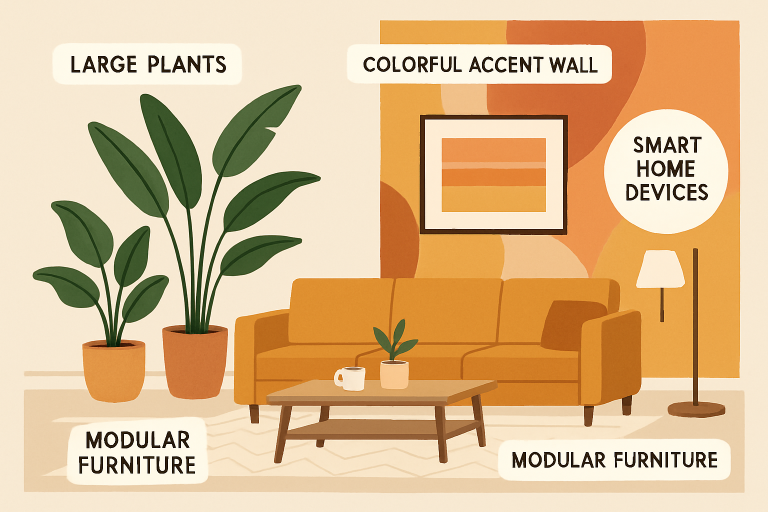
One of the most powerful ways to revitalize your home is to blend indoor and outdoor influences. Biophilic design, an approach that incorporates natural elements, promotes both visual harmony and better well-being. According to House Beautiful, this trend goes far beyond simply adding a few houseplants. Consider vertical gardens, large leafy arrangements, or even living walls. If you have limited access to natural light, opt for realistic faux plants or botanical-patterned furnishings to create a serene, nature-inspired setting. Studies have shown that adding greenery to your environment can reduce stress and improve air quality, making your home a true urban oasis.
Embrace Bold Colors and Patterns
Modern interiors often get associated with clean, neutral palettes, but today’s design world is full of color and energy. Experimenting with vibrant hues and striking patterns can reinvigorate even the most minimal spaces. Pops of color, whether painted on an accent wall or featured in statement textiles, create focal points and enliven your rooms. Unique geometric or abstract patterns in rugs, wallpaper, or upholstery add personality and depth.
Incorporate Smart Home Technology
Efficiency and convenience are hallmarks of the modern lifestyle. Integrating smart home technology makes your living space adaptable and responsive. Devices like automated thermostats, smart speakers, and interconnected lighting systems can be controlled by voice, app, or set to run on custom schedules. For instance, smart bulbs offer dimming features and customizable color settings, allowing you to change the mood of a room with a simple command. According to This Old House, these innovations not only save energy but also enhance comfort, security, and long-term property value, making them a worthwhile investment for homeowners.
Choose Sustainable Materials
Eco-friendly design is more than a trend—it’s a commitment to the environment and personal well-being. Reclaimed wood, bamboo, recycled glass, and cork are just a few of the materials now favored for their low impact and high style. Salvaged or upcycled pieces bring a sense of character and story to your decor. Additionally, switching to low-VOC or zero-VOC paints and non-toxic finishes enhances indoor air quality, a crucial consideration for maintaining a healthy living environment. Projects such as using salvaged barn wood for shelving or furniture pieces can personalize your space while minimizing the ecological footprint. These thoughtful choices create interiors that are both sustainable and stunning.
Integrate Statement Lighting
Lighting functions as both a practical solution and an important design feature. Statement lights—decorative fixtures like sculptural pendants, bold chandeliers, or oversized floor lamps—become works of art that draw the eye and define a room’s atmosphere. Consider installing dimmer switches and opting for LEDs to merge energy efficiency with aesthetic versatility. The proper lighting not only highlights your interior features but can also completely change how you experience each space, making this an essential element of any modern redesign.
Incorporate Modular Furniture for Flexibility
Versatile furniture is at the heart of modern living. Modular sofas, nesting tables, and movable ottomans enable you to configure a space around your needs—whether you’re hosting guests, relaxing, or adapting to a home office. Select neutral fabric tones for modular pieces to keep them adaptable across evolving decor schemes. This flexibility is essential for urban apartments or smaller homes, where maximizing functionality is a top priority.
Embrace Asymmetry for Visual Interest
Modern interiors are becoming increasingly engaging, characterized by a sense of surprise and movement. Arranging furniture slightly off-center or grouping artwork in unexpected ways adds dynamism and makes rooms feel unique and lived-in. Asymmetry works particularly well with open layouts, injecting personality and breaking up predictability. Pair bold colors or sculptural pieces with minimalist backgrounds to strike a harmonious balance between energy and calmness. This nuanced approach results in interiors that fascinate without overwhelming.
Conclusion
Contemporary home design is about combining comfort, style, and function with a focus on health and sustainability. By bringing elements of nature indoors, experimenting with color, adopting smart technologies, and choosing eco-friendly materials, anyone can transform their living environment into a true modern sanctuary. For further inspiration and to see how these concepts are integrated into real properties, explore current modern homes for sale and envision how these creative ideas could shape your next living space.
Leave A Reply!