Explore the latest advancements in aesthetic surgery and how they are transforming patient outcomes and experiences.
Advancements in Aesthetic Surgery and Patient-Centered Care
Introduction

Many of us, at some point, consider ways to improve our appearance or boost our self-confidence. Aesthetic medical procedures offer a pathway to address these personal goals. They go beyond simple physical changes, often leading to significant emotional well-being and a profound psychological uplift.
This extensive guide will explore the fascinating world of aesthetic medical procedures. We will define what they are, trace their history, and look at the most popular surgical and non-surgical options available today. Our focus will also be on the crucial aspects of patient-centered care, ensuring safety standards, and how to choose a qualified provider.
The field has seen remarkable growth and innovation.
The Evolution and Definition of Aesthetic Medical Procedures
Aesthetic medicine, at its core, is a branch of healthcare dedicated to enhancing physical appearance and improving self-image. It encompasses a wide array of medical procedures, both surgical and non-surgical, designed to address concerns related to aging, body shape, skin condition, and other cosmetic aspects. Unlike reconstructive surgery, which aims to restore function or appearance after trauma, disease, or birth defects, aesthetic procedures are primarily elective, chosen by individuals seeking to refine or refresh their appearance. This distinction is crucial, though the lines can sometimes blur, as many aesthetic techniques have their roots in reconstructive practices.
The history of aesthetic medicine is surprisingly long and rich, dating back to ancient civilizations. Evidence suggests that early forms of what we now recognize as aesthetic interventions were practiced over two millennia ago. For instance, in ancient India, sophisticated techniques like the “forehead flap” were used to reconstruct noses, often for soldiers injured in battle or individuals who had suffered punishments. Similarly, ancient Egyptians utilized various oils, waxes, and natural ingredients like Cyperus and honey not just for wound healing but also for their anti-aging and skin-improving properties. These early practices laid foundational knowledge, demonstrating humanity’s enduring desire to improve or maintain appearance.
Fast-forward to the modern era, and aesthetic medicine has transformed dramatically, gaining significant medical recognition. In 2024, a landmark event occurred with the Royal Society of Medicine establishing a dedicated section for aesthetic medicine and surgery, underscoring its growing importance and professionalization within the medical community. This formal recognition highlights the shift from loosely regulated practices to a field increasingly governed by scientific principles and rigorous standards.
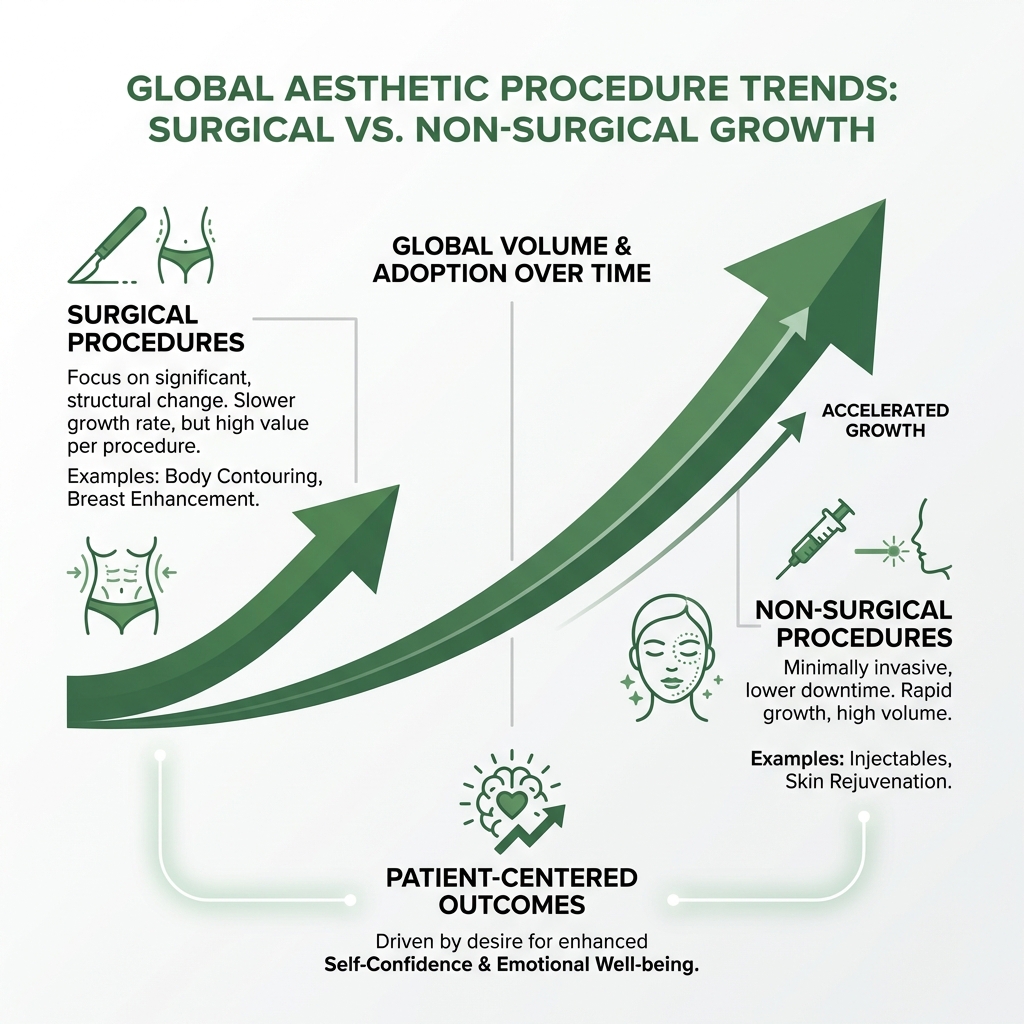
So, how does aesthetic medicine differ from cosmetic surgery? While often used interchangeably, “aesthetic medicine” is a broader term. Cosmetic surgery typically refers to invasive procedures performed by plastic surgeons, involving incisions and general anesthesia to reshape body structures—think facelifts or breast augmentations. Aesthetic medicine, on the other hand, includes these surgical interventions but also heavily emphasizes minimally invasive techniques. These procedures often replace the “scalpel with the needle,” utilizing injectables, lasers, and other technologies that require little to no downtime. This shift towards less invasive options has been a major driver of the field’s growth; for example, nonsurgical procedures increased by a staggering 356% from 1997 to 2011, according to the American Society for Aesthetic Plastic Surgery.
The multidisciplinary nature of aesthetic medicine is another defining characteristic. It often involves collaboration among various medical professionals, including plastic surgeons, dermatologists, oculoplastic surgeons, and even mental health professionals, especially when addressing patient motivations and expectations. This comprehensive approach ensures that patients receive holistic care, addressing not just physical changes but also psychological well-being. For those seeking a wide range of specialized treatments, from advanced surgical techniques to cutting-edge non-invasive options, understanding the breadth of modern aesthetic medical procedures is key. Expert aesthetic medical procedures combine skilled practitioners with state-of-the-art technology to deliver custom results.
Popular Surgical and Non-Surgical Interventions
The landscape of aesthetic medical procedures is vast, offering solutions for nearly every cosmetic concern. These interventions can be broadly categorized into surgical and non-surgical, each with distinct characteristics regarding invasiveness, recovery time, and longevity of results. The choice between them often depends on the patient’s goals, desired degree of change, and tolerance for recovery.
Globally, the demand for aesthetic procedures is immense, with approximately 20 million procedures performed worldwide between 2014 and 2015. In the United States alone, over 11 million aesthetic procedures were conducted from 2012 to 2013, with a significant majority—83.5%—being non-surgical. This trend highlights a clear preference for less invasive options, though surgical procedures continue to play a vital role in achieving more dramatic and permanent transformations. In the United Kingdom, for instance, non-surgical techniques accounted for 90% of the 50,000 cosmetic procedures performed in 2013-2014.
To better understand the differences, let’s compare the general characteristics of surgical and non-surgical procedures:
Feature Surgical Procedures Non-Surgical Procedures Invasiveness High (incisions, general anesthesia) Low (injections, topical applications, external devices) Downtime Longer (weeks to months) Minimal to none (hours to a few days) Results More dramatic, often permanent Subtle, temporary (requiring maintenance) Risks Higher (anesthesia, infection, scarring) Lower (bruising, swelling, allergic reaction) Cost Generally higher Generally lower per session, but cumulative over time Anesthesia Typically general or local with sedation Often topical numbing cream or none Example Facelift, Breast Augmentation, Liposuction Botox, Dermal Fillers, Laser Hair Removal Among the most popular surgical aesthetic procedures in the U.S., we find:
- Liposuction: A procedure that sculpts the body by removing excess fat deposits.
- Breast Augmentation: Enhances breast size and shape, often using implants.
- Blepharoplasty (Eyelid Surgery): Rejuvenates the appearance of the eyelids by removing excess skin and fat.
- Abdominoplasty (Tummy Tuck): Flattens the abdomen by removing excess skin and fat and tightening abdominal muscles.
- Rhinoplasty (Nose Reshaping): Alters the shape of the nose to improve facial harmony.
These procedures offer significant, long-lasting changes and often address concerns that non-surgical methods cannot.
On the non-surgical front, which has seen explosive growth, the top five procedures in the U.S. include:
- Botulinum Toxin (e.g., Botox): Reduces wrinkles by temporarily relaxing facial muscles.
- Hyaluronic Acid (Dermal Fillers): Restores volume, smooths lines, and enhances facial contours.
- Laser Hair Removal: Uses concentrated light to remove unwanted hair.
- Microdermabrasion: A minimally abrasive procedure to renew overall skin tone and texture.
- Photorejuvenation: Uses intense pulsed light (IPL) to treat sun damage, redness, and uneven skin tone.
These non-surgical options are highly sought after due to their convenience, minimal recovery, and ability to provide noticeable improvements without the commitment of surgery. Many of these treatments can be performed as awake aesthetic medical procedures, allowing for quicker appointments and less downtime. Whether seeking significant surgical change or subtle non-surgical enhancements, the breadth of available options ensures that personalized treatment plans can be developed to meet diverse aesthetic goals.

Trends in Non-Surgical Aesthetic Medical Procedures
The rapid advancement and widespread adoption of non-surgical aesthetic procedures represent one of the most significant trends in modern cosmetic medicine. These treatments offer effective solutions for anti-aging, skin rejuvenation, and body contouring with minimal invasiveness and downtime, appealing to a broad demographic seeking subtle yet impactful improvements.
Botulinum toxin injections, commonly known by brand names like Botox or Dysport, remain the undisputed leader in non-surgical treatments. They work by temporarily relaxing the muscles responsible for dynamic wrinkles, such as frown lines, crow’s feet, and forehead creases. The appeal lies in their effectiveness and the relatively quick procedure time, with results typically lasting three to four months.
Dermal fillers, predominantly composed of hyaluronic acid, are another cornerstone of non-surgical aesthetics. These injectable gels restore lost volume, smooth static wrinkles, improve lips, and contour facial features like cheeks and jawlines. Unlike botulinum toxin, which targets muscle movement, fillers directly address volume loss and skin depressions. The results from hyaluronic acid fillers can last anywhere from six months to two years, depending on the specific product and treatment area. Some advanced fillers also stimulate the body’s natural collagen production, offering benefits that extend beyond the initial treatment.
Laser and light-based therapies have revolutionized skin rejuvenation. Laser hair removal, for example, offers a long-term solution for unwanted body hair by targeting hair follicles with concentrated light. Photorejuvenation, often using Intense Pulsed Light (IPL), addresses a range of concerns including sun damage, age spots, redness, and uneven skin tone, promoting a clearer and more radiant complexion. Beyond these, treatments like microdermabrasion gently exfoliate the skin’s outermost layer, improving texture and reducing superficial imperfections, while chemical peels use specialized solutions to remove damaged outer layers of skin, revealing fresher, smoother skin underneath.
The appeal of these non-surgical methods is their ability to deliver noticeable results with minimal interruption to daily life. They often involve little to no recovery period, allowing individuals to return to their normal activities almost immediately. This convenience, coupled with continuous innovation in technology and techniques, has driven the exponential growth in non-surgical procedures. The demand for these sophisticated, yet accessible, treatments continues to rise, making expert aesthetic medical procedures more attainable for those looking to refresh and refine their appearance.
Tailoring Aesthetic Medical Procedures for Diverse Demographics
Aesthetic medicine is no longer a one-size-fits-all field; it has evolved to recognize and cater to the unique needs and preferences of diverse demographics, including men and various age groups. This personalized approach ensures that treatments are not only effective but also maintain natural-looking results appropriate for the individual.
The rise of men’s aesthetics, sometimes playfully dubbed “Brotox” for male botulinum toxin users, is a significant trend. Historically, aesthetic procedures were predominantly associated with women, but men are increasingly seeking treatments to maintain a competitive edge in their careers, combat signs of aging, or simply feel more confident. For men, the approach often differs from that for women. Providers focus on maintaining masculine facial contours, avoiding an overly feminized or “done” look. Popular treatments among men include botulinum toxin for forehead lines, dermal fillers to improve jawlines or reduce under-eye hollowness, and body contouring procedures like liposuction or non-surgical fat reduction to address stubborn fat deposits. Understanding the nuances of male facial anatomy and aesthetic goals is crucial for delivering satisfactory and natural results. Many of these procedures, particularly fat reduction and body contouring, can be performed as awake aesthetic medical procedures, making them more accessible and less intimidating for male patients.
Age management is another critical aspect of custom aesthetic treatments. Younger individuals, often in their 20s and 30s, may seek preventative treatments to delay the onset of aging signs. This can include light botulinum toxin injections to prevent deep wrinkles from forming, early use of dermal fillers for subtle enhancements, or regular skincare treatments like chemical peels and microdermabrasion to maintain skin health. For those in their 40s, 50s, and 60s, the focus often shifts to restorative treatments that address established signs of aging, such as deeper wrinkles, volume loss, and skin laxity. This might involve more comprehensive filler treatments, laser resurfacing, or surgical options like facelifts or eyelid surgery. The goal is always to achieve a refreshed, natural appearance that aligns with the individual’s age and overall look, rather than attempting to erase all signs of aging entirely.
This emphasis on customization extends to considerations of ethnicity, skin type, and individual lifestyle. A skilled aesthetic practitioner will conduct a thorough consultation to understand not only the patient’s desired outcomes but also their unique physiological characteristics and cultural perspectives. By tailoring treatment plans to these diverse demographics, we ensure that aesthetic medical procedures empower individuals to look and feel their best, reflecting a commitment to truly patient-centered care.
Patient Safety and Selecting a Qualified Provider
The journey into aesthetic medical procedures, whether surgical or non-surgical, begins and ends with patient safety. This paramount concern necessitates a careful selection of a qualified and board-certified provider. The expertise and credentials of your practitioner directly impact the safety and success of your treatment.
One of the most critical steps in choosing an aesthetic provider is verifying their board certification. For surgical procedures, this typically means a certification from the American Board of Plastic Surgery. For non-surgical treatments, relevant board certifications might include dermatology or other specialties with extensive training in aesthetic medicine. Board certification signifies that a physician has met rigorous standards of education, training, and experience in their specialty, demonstrating a commitment to patient care and ethical practice.
Organizations like the American Society of Plastic Surgeons (ASPS) play an indispensable role in ensuring safety and upholding professional standards within the field. The ASPS provides extensive resources for both practitioners and patients, including guidelines for safe practices, patient safety news, and a “Find a Surgeon” tool that allows individuals to locate board-certified plastic surgeons in their area. Similarly, the ASPS Foundation supports research and education to advance patient safety. These organizations are instrumental in advocating for strict adherence to medical protocols, continuous education, and transparent communication about potential risks.
Despite the advancements in aesthetic medicine, it is crucial to remember that all medical procedures carry potential risks. These can range from minor and temporary side effects like bruising, swelling, or redness, to more significant complications such as infection, adverse reactions to anesthesia, excessive bleeding, nerve damage, or unsatisfactory cosmetic outcomes, including scarring. A qualified provider will thoroughly discuss these risks, along with the benefits, during your consultation, ensuring you make an informed decision. They will also assess your overall health, medical history, and any existing conditions to determine your suitability for a procedure and minimize potential complications. For instance, individuals with certain long-term medical conditions or those who smoke may face higher risks and might be advised to address these factors before proceeding with treatment. Setting realistic expectations is also a key aspect of patient safety; a reputable provider will help you understand what results are achievable and what limitations exist.
Entrusting your aesthetic goals to a board-certified and experienced professional is the cornerstone of a safe and successful outcome. We strongly encourage prospective patients to conduct thorough research, ask pertinent questions, and prioritize safety above all else when selecting their aesthetic medical provider.
The Consultation and Treatment Process
Embarking on an aesthetic medical procedure involves a structured and comprehensive process, designed to ensure both your safety and satisfaction. This journey typically begins with a thorough consultation, followed by detailed preparation, the procedure itself, and a well-managed recovery phase. Understanding each step can help alleviate anxieties and set realistic expectations.
The consultation is perhaps the most critical initial step. During this meeting, your chosen provider will conduct a detailed review of your medical history, including any previous surgeries, current medications, allergies, and lifestyle habits. A physical assessment will also be performed, focusing on the areas you wish to address. This is your opportunity to openly discuss your aesthetic goals, concerns, and expectations. We believe in truly patient-centered care, which means listening attentively to your desires and collaborating with you to develop a customized treatment plan. This plan will outline the recommended procedures, the expected outcomes, and any potential alternatives. It’s also the time to ask all your questions, no matter how small, about the procedure, recovery, and costs.
Once a treatment plan is established, you will receive comprehensive pre-operative instructions. For surgical procedures, these often include guidelines on diet, medication adjustments, and the cessation of smoking and nicotine products. For instance, maintaining a stable weight for 6-12 months prior to certain body contouring procedures is often recommended, and it is crucial to avoid smoking or nicotine for at least 4-6 weeks before and 4 weeks after surgery, as these can significantly impair healing and increase complication risks. Even for non-surgical treatments, specific instructions might include avoiding certain skincare products or medications that could increase bruising.
On the day of your treatment, depending on the procedure, you might receive local anesthesia, sedation, or general anesthesia. Surgical procedures are performed in accredited facilities, prioritizing your safety and comfort. Non-surgical treatments are typically performed in a clinic setting, often with topical numbing creams or local anesthetics. The procedure itself will be executed with precision and care, adhering to the highest medical standards.
The post-operative care and recovery phase is equally vital for optimal results. You will be provided with detailed instructions on wound care, pain management, and activity restrictions. Swelling and bruising are common after many procedures, and their timeline varies. For example, bruising and swelling are most noticeable 1-2 weeks after surgery, but full resolution can take months, or even up to a year for complex procedures like rhinoplasty. Managing swelling with cold compresses and elevation can aid recovery. Regular follow-up appointments will be scheduled to monitor your healing progress, address any concerns, and ensure you are achieving the desired outcome. Adherence to these post-treatment guidelines is essential for a smooth recovery and to maximize the longevity and quality of your results.
Longevity and Maintenance of Aesthetic Medical Procedures
A common question among individuals considering aesthetic medical procedures is: “How long do the results typically last?” The answer varies significantly depending on the type of procedure, individual factors, and the quality of post-treatment care. Understanding the longevity of results and the importance of maintenance is crucial for long-term satisfaction.
For non-surgical procedures, results are generally temporary and require ongoing maintenance to preserve their effects. For instance, botulinum toxin injections, widely used to smooth dynamic wrinkles, typically last between three to four months. Dermal fillers, primarily hyaluronic acid-based, offer more prolonged results, ranging from six months to two years, depending on the specific product, the area treated, and the individual’s metabolism. Treatments like laser hair removal can provide permanent hair reduction over several sessions, but touch-up treatments might be needed over time. Similarly, chemical peels and microdermabrasion offer temporary improvements in skin texture and tone, necessitating regular sessions for sustained benefits. The temporary nature of these treatments means that patients often integrate them into a routine aesthetic maintenance plan.
Surgical procedures, on the other hand, generally offer more permanent and dramatic changes. For example, liposuction permanently removes fat cells from treated areas, though significant weight gain can still impact the remaining fat cells. Procedures like breast augmentation, rhinoplasty, and abdominoplasty yield long-lasting results, but it’s important to note that the natural aging process continues. A facelift, while significantly rejuvenating the face and neck, cannot halt aging entirely; its effects typically last for 10-15 years before natural aging may prompt consideration of further enhancements. Eyelid surgery (blepharoplasty) also provides enduring results, often lasting many years.
Regardless of the procedure, lifestyle factors play a substantial role in maintaining the longevity of results. Key considerations include:
- Weight Stability: Significant fluctuations in weight can compromise the results of body contouring procedures like liposuction and abdominoplasty. Maintaining a stable weight is vital.
- Skin Elasticity and Health: A healthy skincare regimen, including consistent use of sunscreen, antioxidants, and moisturizers, helps preserve skin quality and can extend the results of both surgical and non-surgical treatments.
- Sun Protection: Excessive sun exposure is a primary cause of premature aging and can diminish the effects of many aesthetic procedures. Diligent sun protection is paramount.
- Overall Health: A balanced diet, regular exercise, and avoiding smoking contribute to overall health, which in turn supports the skin’s integrity and the body’s ability to maintain aesthetic improvements.
In conclusion, while some procedures offer more permanent solutions, most aesthetic interventions benefit from a proactive approach to maintenance. Regular follow-ups, adherence to post-treatment care instructions, and a healthy lifestyle are all integral to maximizing the duration and quality of your aesthetic results.
Frequently Asked Questions about Aesthetic Medicine
We understand that exploring aesthetic medical procedures can bring up many questions. Here, we address some of the most common inquiries to help you steer this exciting field with confidence.
Who is a good candidate for aesthetic medical treatments?
Ideal candidates are generally healthy individuals with realistic expectations who wish to address specific appearance concerns. It’s crucial for candidates to be in good physical and mental health. Factors such as stable weight, non-smoking status, and controlled medical conditions (like diabetes or high blood pressure) are particularly essential for surgical candidates, as these can significantly impact healing and overall safety. Individuals should also have a clear understanding of the procedure, its potential outcomes, and recovery process. A thorough consultation with a qualified provider will determine if you are a suitable candidate for a particular treatment.
How do I choose a qualified and board-certified provider?
Choosing the right provider is paramount for both safety and satisfactory results. We recommend several key steps:
- Verify Board Certification: Ensure your provider is board-certified by a recognized medical board relevant to the procedures you are considering (e.g., American Board of Plastic Surgery for surgeons, or American Board of Dermatology for skin specialists). This ensures they have met rigorous training and ethical standards.
- Review Experience: Inquire about their specific experience with the procedures you are interested in. Ask to see before-and-after photos of their previous patients.
- Check Patient Testimonials and Reviews: Look for feedback from other patients to gauge their experience with the provider’s professionalism, results, and patient care.
- Accredited Facility: For surgical procedures, confirm that the facility where the surgery will take place is accredited, meaning it meets strict safety and quality standards.
- Personalized Consultation: A good provider will offer a comprehensive consultation, listen to your concerns, and develop a customized treatment plan, rather than a one-size-fits-all approach. They should also openly discuss all potential risks and benefits.
What is the typical cost of these procedures?
The cost of aesthetic treatments varies significantly based on several factors:
- Specific Procedure: Surgical procedures are generally more expensive than non-surgical ones due to anesthesia, facility fees, and longer recovery.
- Provider’s Expertise and Location: Highly experienced and renowned providers, especially in metropolitan areas, may charge more.
- Geographic Location: Costs can differ considerably between cities and regions.
- Complexity of the Individual Case: More extensive or complex cases will naturally incur higher costs.
- Number of Sessions: For non-surgical treatments, the total cost will depend on the number of sessions required to achieve optimal results.
Aesthetic procedures are typically not covered by health insurance, as they are considered elective. Because pricing is highly personalized, interested individuals should visit the practice website or schedule a formal consultation to receive an accurate and detailed cost estimate custom to their specific needs and desired outcomes.
Conclusion
The field of aesthetic medical procedures has undergone a profound change, evolving from ancient practices to a sophisticated branch of modern medicine. We have explored its rich history, distinguished between surgical and non-surgical interventions, and highlighted the diverse range of popular treatments available today. The exponential growth in non-surgical options, coupled with the enduring efficacy of surgical solutions, underscores the dynamic nature of this specialty.
At the heart of these advancements lies a steadfast commitment to patient safety and personalized care. The importance of selecting a qualified, board-certified provider cannot be overstated, as their expertise and adherence to rigorous standards are paramount for achieving safe and satisfying results. We emphasize the necessity of thorough consultations, realistic expectations, and diligent adherence to pre- and post-treatment instructions to maximize the longevity and quality of any aesthetic enhancement.
As technology continues to advance and our understanding of the human body deepens, the future of aesthetic medicine promises even more innovative and effective solutions. Our collective goal remains to empower individuals to make informed decisions, align their aesthetic aspirations with professional expertise, and ultimately experience the profound emotional and psychological uplift that comes from feeling confident and comfortable in their own skin.
Leave A Reply!