Explore A Parent’s Guide to the Best Selection of Girls School Uniforms for Every Grade for a smooth school year ahead.
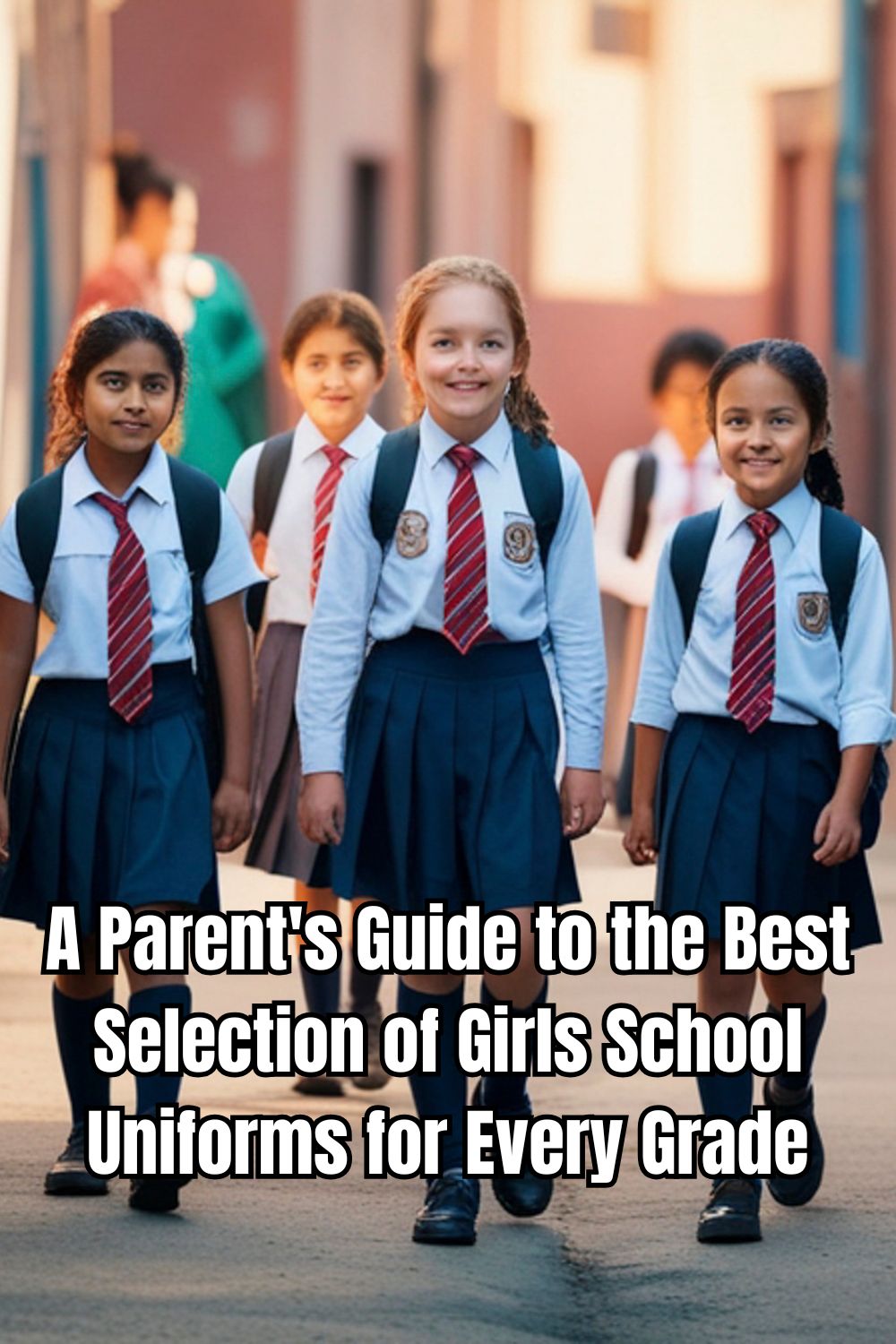
A Parent’s Guide to the Best Selection of Girls School Uniforms for Every Grade
Every August, parents face a familiar sprint: school starts in weeks, and the list of things to sort out before the first bell rings keeps growing.
Uniforms tend to sit somewhere in the middle of that list, treated as an afterthought after the bigger decisions have been made. But getting girls’ school uniforms right, including the right pieces for the right age, in the right fit, matters more than it might seem at first glance.
A well-chosen uniform wardrobe can genuinely ease the school year. A poorly chosen one, where pieces are uncomfortable by October, too small by January, or so stiff they cause daily friction, creates its own kind of hassle.
This guide walks through what to look for at each grade stage, from preschool through high school, so that the uniform side of back-to-school prep is one less thing to second-guess.
Why grade stage changes what you need
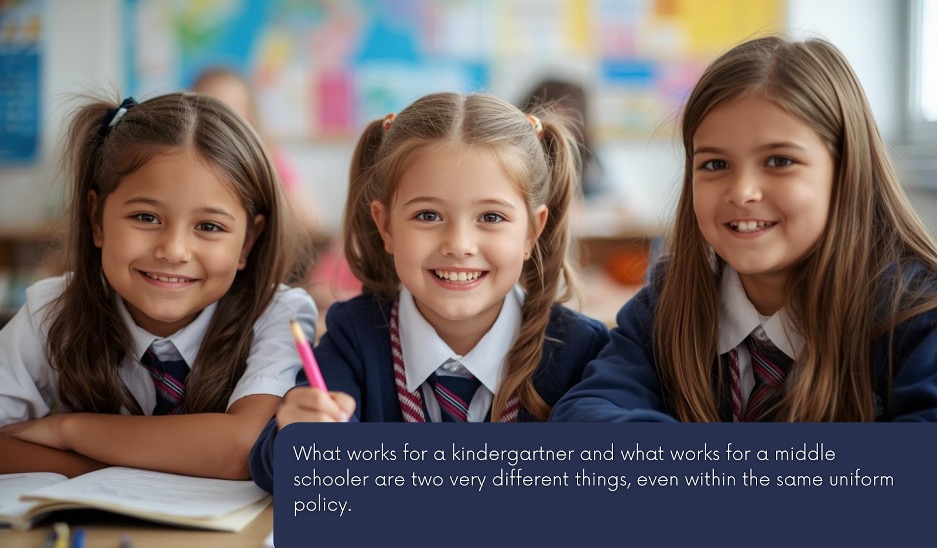
Uniform requirements often look the same on paper across grade levels, but the practical needs of a five-year-old and a thirteen-year-old are genuinely different.
Younger children need pieces that are easy to manage independently, durable enough for active play, and comfortable enough to be forgotten about once they are on.
Older girls are more likely to have opinions about fit and appearance, and are also growing more unpredictably, which means longevity and adjustability matter more.
School-specific dress code requirements also vary across the metros. Whether your child attends a private school with a strict color-and-style policy or a charter school with a looser interpretation, the range of options still needs to fit within what is approved.
Checking your school’s specific guidelines before you shop is worth the five minutes it takes, particularly if your child is starting at a new school this year.
Preschool through early elementary: Comfort and independence first
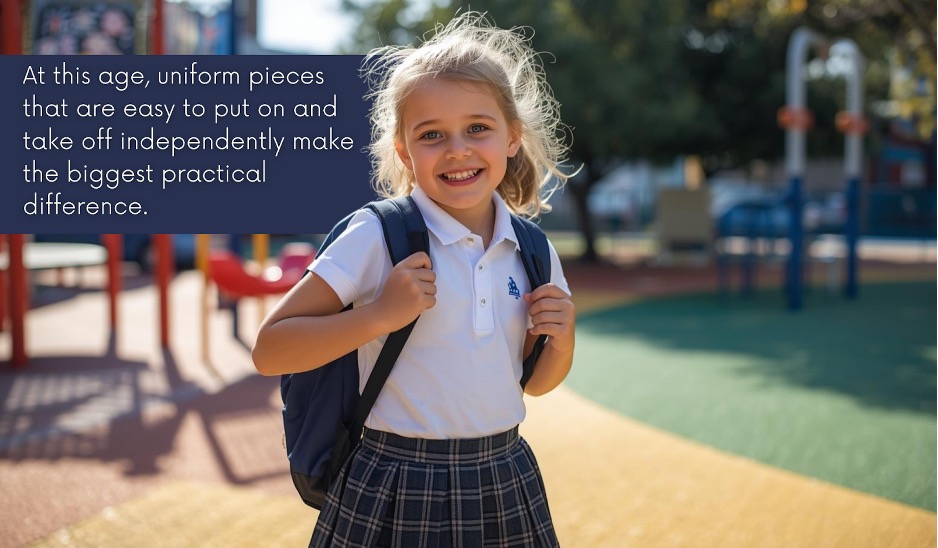
At the preschool and early elementary level, the most important thing a uniform can do is stay out of the way. Children this age are working on independence; dressing themselves, managing bathroom trips, navigating recess, and clothing that adds friction to any of those moments makes everything harder.
The pieces that tend to work best for this age group are soft, breathable, and forgiving in fit. Look for elastic or adjustable waistbands on skirts and pants, fabrics with a little stretch, and pullover or simple-button tops rather than anything fiddly. Polo shirts in cotton-blend fabrics are a consistent workhorse at this age: they are easy to wash, hold their shape, and tend to stay tucked in better than most alternatives.
For parents building a first uniform wardrobe, starting with a reliable source makes the process significantly easier. French Toast offers a broad selection of girls school uniforms for every grade, including the kind of core preschool and elementary pieces that hold up to repeated wear without constant replacement.
At this age especially, having three to four interchangeable sets rather than one or two is worth the upfront investment, given how quickly clothes get cycled through laundry at this stage.
What to prioritize for preschool and grades K-3
- Elastic or internal adjustable waistbands on all bottoms
- Soft, breathable fabrics: cotton blends tend to outperform 100% polyester for comfort at this age
- Simple fastenings: pull-on styles or large buttons over small snaps or hooks
- Darker colors or patterned bottoms for this age group, which better mask playground wear
- Proper sizing rather than “room to grow”: too-large clothing can create its own movement barriers for young children
Upper elementary: durability and growing room
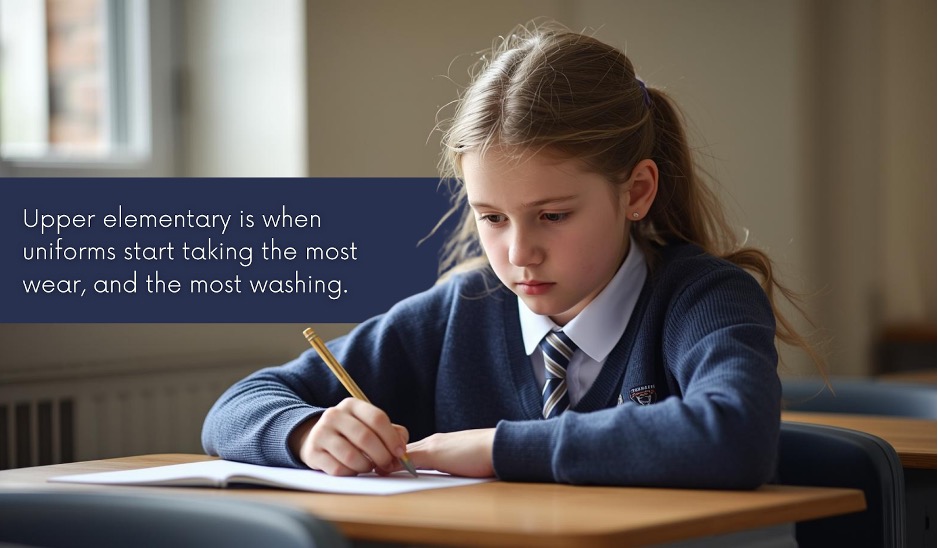
Somewhere around grades three through five, the uniform conversation shifts. Children this age are more physically active, more self-sufficient, and also growing in sudden, unpredictable bursts.
What fits well in September may look noticeably different by March, which is why garment longevity and adjustability become more important considerations at this stage.
Seam reinforcement and fabric composition matter more in upper elementary than in the earlier years.
Children are harder on their clothes at this age: more running, more climbing, more sitting on rough surfaces.
Polyester-cotton blend fabrics tend to offer the best balance of durability and washability, holding their color and shape through the kind of frequent laundering that a school uniform warrants.
Layering also becomes relevant at this stage, particularly in the Pacific Northwest where mornings can be cool and afternoons warm. A well-fitted cardigan or fleece in the school’s approved color extends the wearability of the core uniform pieces through weather transitions without requiring a full wardrobe overhaul.
What to look for in grades 3-5 uniform pieces
- Adjustable waistbands that can let out an inch or two as the year progresses
- Reinforced seams, particularly in trousers and skirt waistbands
- Stain-resistant or easy-care fabric finishes that hold up under regular washing
- At least one approved layering piece (cardigan or school hoodie) in the uniform rotation
Middle school: fit, function, and a little autonomy
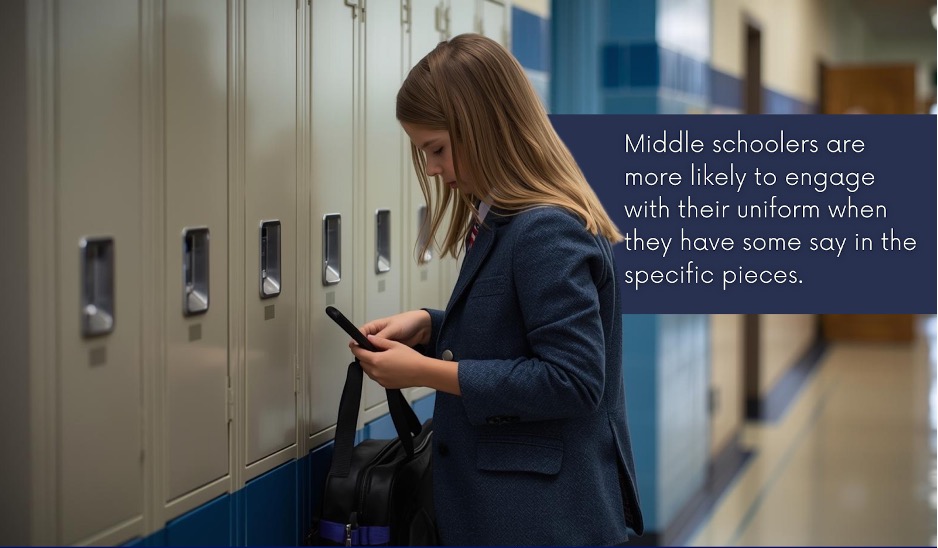
Middle school is where the uniform conversation gets more nuanced. Girls this age are developing a stronger sense of personal identity, and clothing is often a significant part of how that identity gets expressed. A uniform policy doesn’t eliminate that; it redirects it. How pieces fit, which options within a policy they choose, and whether they feel comfortable in what they are wearing all become more emotionally loaded questions than they were in the earlier grades.
The practical side at this stage is that bodies are changing more rapidly, and fit can shift dramatically across a single school year.
Pieces that were bought correctly sized at the start of the year may need replacing mid-year, which is why building a uniform wardrobe with some flexibility is worth the forethought.
Skorts and flat-front trousers with adjustable waists, longer-hem polos that account for torso growth, and layering options give middle schoolers a little more range within their approved uniform choices. Besides that, there are a few practical things you can do with outgrown kids’ clothes.
Involving girls this age in the shopping process, even as simple as letting them choose between two approved options, tends to increase buy-in significantly. Resistance to uniforms at this age is often more about feeling unheard than about the uniform itself.
Families navigating this transition may also find useful framing in our resources on how to find the right school for your child’s learning needs, which touches on how school environment and culture shape a child’s overall experience.
High school: polish, practicality, and longevity
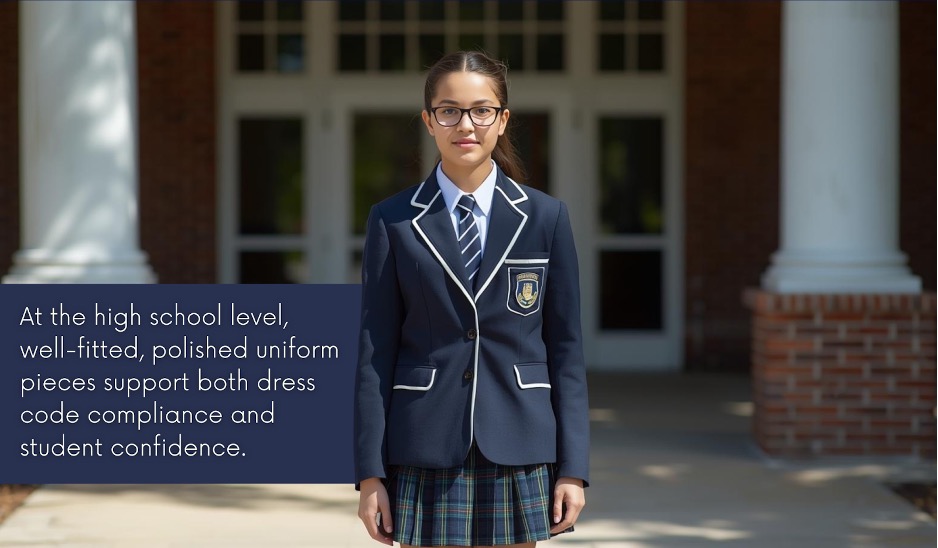
By high school, most girls have a fairly clear sense of what they are comfortable wearing and what they are not, which actually makes the uniform conversation a little more straightforward than in middle school.
The challenge at this stage is more logistical than emotional: pieces need to look presentable through a full day of use, hold up to a more demanding schedule, and fit well enough that students are not constantly adjusting or fidgeting.
Fit is the single most important factor in how a high schooler experiences a school uniform. A blazer that pulls across the shoulders, trousers that are too long, or a blouse that gaps at the buttons will be a source of daily irritation regardless of how practical the uniform policy is on paper.
Taking the time to find pieces that actually fit, rather than defaulting to the nearest approximate size, makes the school year meaningfully smoother.
At this stage, it is also worth investing in quality over quantity. High schoolers typically take better care of their clothing, wear it more consciously, and are less likely to put it through the same physical intensity as a younger child.
Two or three very well-chosen sets, kept in good condition, is often a more practical approach than a larger wardrobe of pieces that wear out faster.
A few practical notes for any grade
Regardless of grade level, a few principles apply consistently when building a school uniform wardrobe for girls.
- Always check the dress code before shopping, not after. Color requirements, approved silhouettes, and logo restrictions vary by school and can change year to year.
- Buy ahead of the season, not behind it. Back-to-school stock at most uniform retailers sells down quickly in late July and early August. Ordering in June or early July gives you a better selection and less pressure.
- Account for laundry cycles when deciding how many pieces to buy. A minimum of three sets means a child always has something clean and ready, even with a weekend wash routine.
- Label everything, especially at younger ages. This is not a style decision; it is a practical one. Items that go through school laundry systems or get left in change rooms will come back to you if they are labeled.
Getting the uniform side of back-to-school sorted early is one of those small, practical acts that frees up mental space for everything else the season demands.
When the pieces are right for the grade, the fit is comfortable, and the supply is sufficient, the uniform becomes background noise rather than a recurring problem.
Leave A Reply!