Explore how to tailor your dog’s walks for optimal health and happiness. Factors like breed and age play vital roles in exercise.
Tailoring Your Dog’s Walks: Matching Exercise to Breed, Age, and Temperament
Key Takeaways
- Exercise needs differ dramatically based on breed, age, and temperament.
- Puppies, adults, and senior dogs each require custom routines to support growth, health, and mobility.
- Signs of overexertion should never be ignored; moderation is key.
- Environmental and seasonal conditions must be factored into every outing.
- Consult experts if in doubt about your dog’s ideal activity level.
Table of Contents
- Introduction
- Understanding Breed-Specific Exercise Needs
- Adjusting Walks According to Age
- Considering Individual Temperament
- Recognizing Signs of Overexertion
- Adapting to Environmental Conditions
- Creating a Balanced Exercise Routine
- Consulting with Professionals
Introduction
Ensuring your dog receives the right amount of exercise is crucial not just for its physical health but also for its mental well-being. Every dog is unique, and its ideal walk schedule is shaped by breed, age, and temperament. For busy owners, finding ways to offer daily exercise can be a challenge—sometimes, it’s easier and more beneficial to hire a dog walker in Seattle to help maintain your dog’s active routine.
A one-size-fits-all approach doesn’t work when it comes to canine walks. Over-exercising a puppy or under-stimulating an active breed can lead to behavioral and health issues. Learning to tailor walks to your dog’s needs ensures a happier, healthier pet and a more harmonious household. Understanding these differences is essential whether you’re strolling through neighborhood parks or tackling urban trails together.
Understanding Breed-Specific Exercise Needs
Exercise requirements are highly dependent on breed. High-energy breeds like Border Collies and Australian Shepherds may require extensive daily exercise—sometimes up to two hours—to help channel their energy constructively. Conversely, as veterinarians recommend, brachycephalic breeds such as Bulldogs and Pugs are prone to respiratory problems and generally thrive with shorter, slower walks.
Small companion breeds, including Shih Tzus or Chihuahuas, have modest exercise needs. For these dogs, activity is best spread across multiple short outings throughout the day. Sporting and working breeds, on the other hand, need regular, vigorous exercise, including games that stimulate their minds as well as their muscles.
Adjusting Walks According to Age
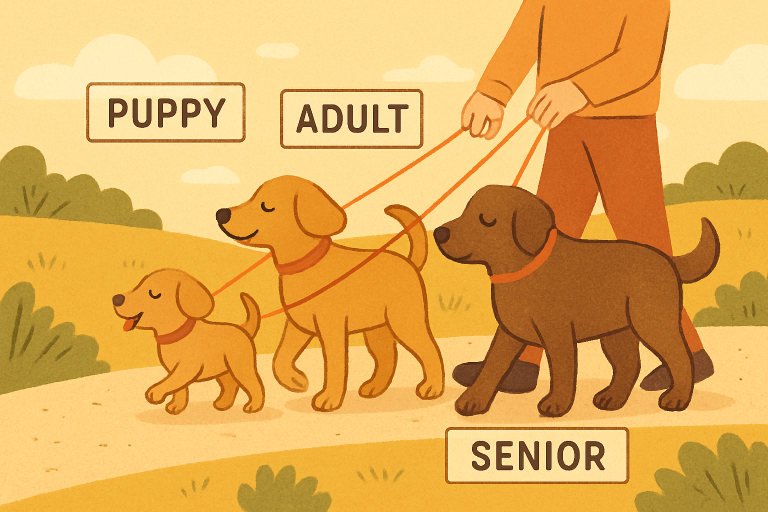
Puppies
Puppies are bundles of energy, but their immature joints require protection. The five-minute rule—five minutes of walking per month of age, up to twice a day—helps avoid overexertion and developmental issues. A four-month-old puppy, for example, should have two 20-minute walks daily, balanced with gentle play and rest.
Adult Dogs
Most adult dogs fall into a 30–60 minutes per day exercise pattern, but high-drive breeds often thrive with more activity and mental engagement. Monitoring weight and behavior is crucial; sudden changes may signal that your routine needs modification.
Senior Dogs
As dogs age, their joints and endurance decline, making gentle, brief walks essential for ongoing mobility and cognitive stimulation. Consider surfaces easy on arthritic joints and avoid excessive lengths or rough terrain.
Considering Individual Temperament
Even within the same breed and age group, individual temperament dictates how much and what exercise your dog needs. Enthusiastic, outgoing dogs may benefit from long, adventurous walks and interactive games, while calmer, more anxious pets enjoy shorter, familiar routes or may benefit from walks with trusted companions. Carefully observing your dog’s cues—tail wagging, alertness, or signs of boredom—will guide you toward their best routine.
Recognizing Signs of Overexertion
Regardless of age or breed, it’s vital to watch for signs that your dog is being pushed too hard. Warning signs include heavy panting, slowing down, limping, or simply showing resistance to continuing the walk. When you witness these symptoms, it’s time to take a break and consult a veterinarian if the behavior continues. Overexertion can have long-term health consequences, so err on the side of caution.
Adapting to Environmental Conditions
Environmental factors—weather, terrain, and time of day—should always be considered. In summer, hot pavement can burn paw pads and heatstroke becomes a risk, especially for brachycephalic breeds. Ice and salted sidewalks in winter can irritate paws and make walking hazardous. Adjust walk duration and timing to suit current weather, and always ensure your dog is hydrated and protected from extreme temperatures.
Creating a Balanced Exercise Routine
Beyond walking, dogs benefit from structured play and mental stimulation. Add enrichment activities like fetch, scent work, or agility games. Combining physical activity with obedience exercises encourages psychological and physical development, resulting in a well-rounded, satisfied dog.
Consulting with Professionals
No two dogs have identical needs, so individualized guidance from veterinarians or certified trainers is invaluable. These professionals can help assess your dog’s physical condition, tailor an appropriate exercise plan, and offer creative ideas for keeping your dog active even as its needs change throughout life.
By respecting breed, age, and personality and listening to your pet’s daily signals, you can craft walks that support your dog’s health, happiness, and longevity, creating enriching experiences for both of you.
Leave A Reply!