Discover tips on how to spot slow moisture problems in your home, ensuring your living space remains safe and healthy.
How to Spot “Slow Moisture” Problems in Your Home
As you already know, your home constantly needs maintenance, even if in terms of aesthetics, it’s literally everything you hoped for and more. Well, chances are, maybe once or twice a month, there’s some maintenance tasks and tune-ups that your house needs, right? But there are some issues that you don’t really know are an issue until it’s too late, mold and general mold growth is probably the best example here.
So, slow moisture problems are the kind of homeowner issue that makes a person feel mildly haunted, because nothing is obviously “wrong,” but something is definitely off. Like the house looks clean, the floors look fine, the ceiling isn’t dripping, and yet there’s this musty smell that shows up in the colder months when the heat’s running, and the windows are shut, and it’s so specific too, like damp towels that never fully dried, wet cardboard, old basement air, something along those lines.
Well, at this point, you probably get the picture here. But you can pretty much expect that the brain starts doing that thing where it tries to explain it away, like maybe it’s the weather, maybe it’s the dog, maybe it’s the old rug, maybe it’s literally nothing, but it keeps coming back, and that’s when it becomes clear it’s probably not nothing. So, what’s the deal here?
What Does Slow Moisture Look Like?
Well, in the first place here, what even is this? So, a slow moisture issue rarely makes it known; it’s not like mold, where it practically announces itself with a big stain spreading across the ceiling like a movie scene, it’s more like little things that keep happening in the same place, and after a while, it starts feeling suspicious.
The best example here would be the paint on the walls itself, paint might bubble along the edge of a ceiling, not the whole ceiling, just one section. It’s annoying to look at, too, because it looks like a paint issue until it keeps happening. Another example might be a baseboard might look slightly swollen, like it’s gained one millimetre of attitude. A corner might always feel colder and a bit clammy, especially in winter. But even flooring might start lifting at the edges, not enough to trip over, just enough that you notice it and then keep noticing it.
There’s Clues that Make it Way Easier to Figure Out
Thankfully, that’s the case because without any clear indicators this can get worse and worse to where theres some really costly repairs. But the best way to spot slow moisture is noticing when the house acts up, because the timing gives away what kind of moisture it is. So, if the smell gets stronger after rain, that’s one clue. That could give you an indication that maybe you need a roofing contractor, and maybe there’s a leak in the wall that’s due to the roof, which helps you at least determine it’s not a plumbing issue.
If it’s worse when it’s cold outside and warm inside, that’s another clue, because temperature differences can trigger condensation in places that never used to get damp. If it ramps up after showers, laundry, or cooking, then indoor humidity and ventilation are probably involved. Now, sure, it can feel silly to track this, but it doesn’t have to be complicated; it can just be a mental note like, does it happen after a shower, does it happen when the heat runs for hours, does it always happen in the same room, does it show up at night when doors are closed.
It’s Usually in Places No One Looks
When it comes to slow moisture, at least, it is pretty tough to discover. How? Well, it goes to the places homeowners avoid. Like it’s usually found under sinks, behind the toilet, around the tub edge, under the dishwasher, behind the fridge, around washing machine hoses, in the laundry area where things are always a little humid anyway, and in closets that sit on an exterior wall where airflow is basically nonexistent. You might want to check behind large pieces of furniture, too, because it can be found there, like a wardrobe, bookshelf, etc.
Actually, basements and crawlspaces are also classics, because even if there’s no visible water, they can hold damp air, and that air can creep up and make the whole house smell off. And closets are honestly one of the most underrated places to check, because fabric absorbs moisture and smells, and a closet can smell musty long before a room does, which is why opening a closet door and getting hit with “old damp” is such a strong clue.
You Need to See Condensation as a Warning
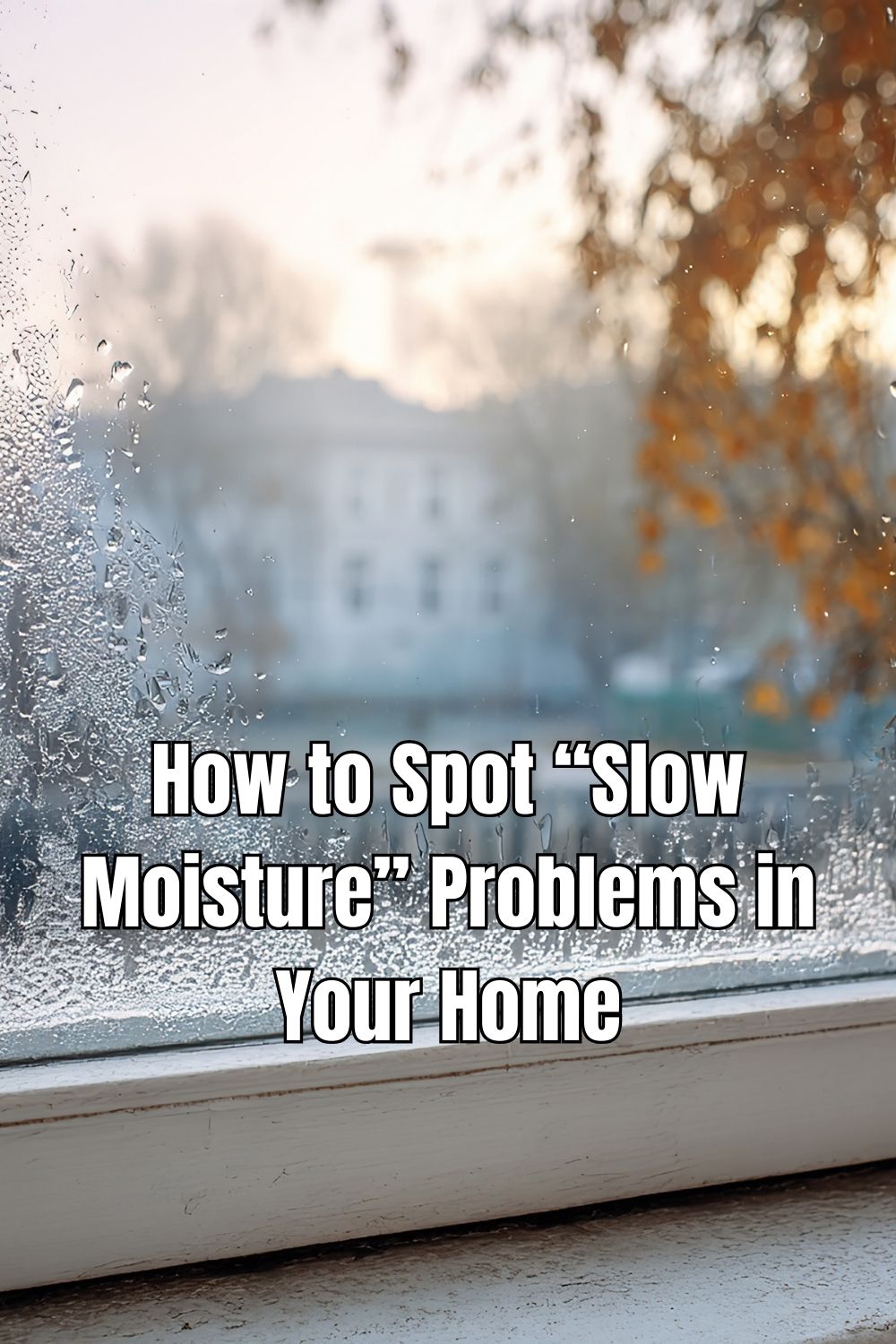
Condensation is one of those things people put up with, like it’s just a winter annoyance, but if it keeps happening, it’s moisture sitting on surfaces, and moisture sitting on surfaces is exactly what mold wants. If windows are constantly wet, or there’s one window that’s always damp while the rest are fine, or a corner of a room feels cold and damp every morning, something is off with airflow, humidity, insulation, or ventilation.
But at the same time, here, you could basically see that habit changes can reveal a lot. Like, if running the bathroom fan longer, using the range hood properly, and making sure the dryer is venting outside actually makes the musty smell calmer, then it’s a pretty high chance here that humidity and ventilation are probably a big part of what’s going on. If nothing changes, no matter what, then it’s more likely there’s a source feeding it, which is when it stops being a lifestyle fix and starts being a home investigation.
But How Can You Narrow it Down?
Smells are annoying because they travel, so the place you smell it isn’t always the source, and that’s why people end up cleaning everything and still feeling like the house smells weird. And, well, that can be heartbreaking considering how hard you’re just trying to work to get rid of this issue. But the simplest way to narrow it down is isolating areas, like closing doors for a couple hof ours, then checking room by room, and opening closets and cabinets because those trap air.
But it’s best to just check behind furniture on exterior walls too, because airflow gets blocked and condensation can happen without anyone seeing it. If the smell seems stronger near a vent, it could be moisture meeting dust in airflow areas, and if it’s stronger in one specific corner, then that corner is basically waving a little flag.
Leave A Reply!