Learn how hemp bedding supports cleaner chicken coops by improving absorbency and reducing dust for better respiratory health.
How Hemp Bedding Supports Cleaner Chicken Coops and Drier Living Spaces
Key Takeaways
- Hemp bedding delivers superior absorbency, resulting in drier and cleaner coops.
- Its low dust profile benefits chicken and caretaker respiratory health.
- Sustainability and compostability make hemp bedding an eco-friendly choice.
- Long-lasting nature offsets initial costs and minimizes labor for poultry keepers.
- Easy implementation and positive user experiences underscore its practicality.
Table of Contents
- Introduction
- Superior Absorbency for Drier Coops
- Low Dust Levels Promote Respiratory Health
- Eco-Friendly and Sustainable Choice
- Cost-Effective and Long-Lasting
- Implementing Hemp Bedding in Your Coop
- Final Thoughts
Introduction
Maintaining a hygienic and moisture-free environment in chicken coops is essential not just for flock health, but also for optimizing egg production and minimizing odors. Where straw and wood shavings once reigned, chicken hemp bedding now stands out, marrying enhanced absorbency and cleanliness with powerful environmental benefits. As poultry keepers look for safer, more sustainable ways to care for their flocks, the advantages of hemp bedding become increasingly clear.
Absorbency and dust control are two critical factors influencing both bird well-being and coop management. Hemp’s natural properties make it an exceptional material for bedding, promoting drier living conditions and lessening respiratory risks for both chickens and their caregivers. These gains come with the added bonus of supporting eco-conscious animal husbandry.
Superior Absorbency for Drier Coops
Compared to common materials like pine shavings or straw, hemp bedding exhibits a unique ability to wick away moisture. Capable of absorbing four to five times its weight in liquid, hemp bedding keeps coop floors dry and drastically reduces the risk of soggy spots. Maintaining a consistently dry base layer minimizes the conditions that can lead to bacterial growth and ammonia odors—a notable upgrade for a chicken’s daily environment.
This level of absorbency isn’t only about comfort; it directly impacts flock health. Damp coops have been linked to the proliferation of pathogens and parasites. According to a study published by the University of Georgia, the right bedding choice plays a significant role in preventing diseases associated with contaminated, moist environments.
Low Dust Levels Promote Respiratory Health
Unlike wood shavings and straw, which are known to kick up fine particles during cleaning and daily chicken activity, hemp is processed to be virtually dust-free. The difference can be stark, especially for those with small or poorly ventilated coops. Air quality inside the coop can quickly become an issue when bedding with high dust content is used, leading to irritation of the birds’ respiratory tracts and even long-term health problems, such as chronic respiratory disease.
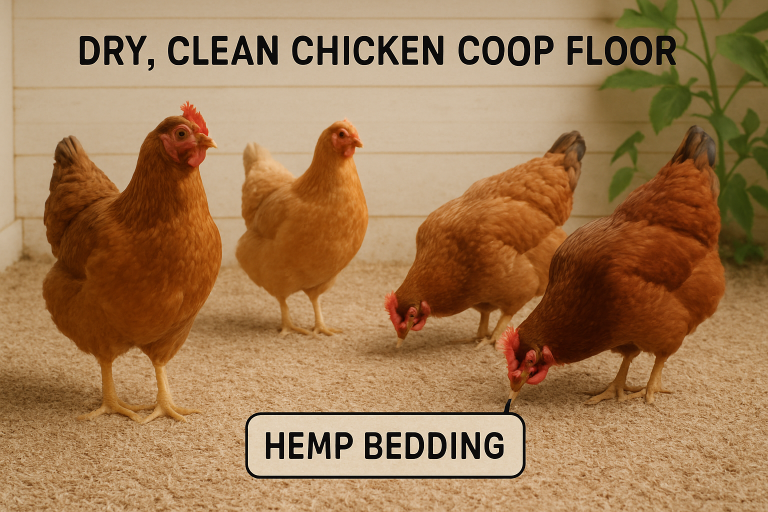
Low-dust bedding isn’t just critical for chickens. People with asthma or allergies will find hemp bedding a much more comfortable material to work with, making daily chores in the coop far safer and more pleasant.
Eco-Friendly and Sustainable Choice
Hemp bedding’s sustainability starts at the source: hemp is a rapidly renewable crop that grows with little need for pesticides, herbicides, or chemical fertilizers. This results in a smaller ecological footprint compared to conventional bedding crops. Further, since hemp is naturally biodegradable and compostable, the soiled bedding can be transformed into nutrient-rich compost, closing the loop between coop care and sustainable agriculture.
Choosing sustainable materials, such as hemp, can have broader positive impacts. Organizations such as the Environmental Protection Agency advocate for the use of renewable agricultural products and composting waste to support farm and garden health.
Cost-Effective and Long-Lasting
Hemp bedding’s performance means it generally does not need to be replaced as often as straw or wood shavings, as it absorbs more and breaks down more slowly. While initial purchase prices may be higher, the cost-per-use is lower in the long run, due to fewer top-ups and fewer full cleanouts required. This not only saves money but also reduces labor, freeing up time and energy for flock care and other activities.
Users frequently note that, as the bedding lasts longer before becoming saturated, manure management becomes easier and the coop stays fresher between cleanings, helping small-scale and backyard keepers streamline their routines.
Implementing Hemp Bedding in Your Coop
Switching to hemp bedding is simple. First, remove all old bedding and thoroughly clean the coop to remove lingering pathogens or pests. Once sanitized and dried, spread an even layer—typically about one inch deep—across the floor and into the nesting boxes. Monitor moisture and odor levels, and spot clean as needed; most keepers find that only small amounts need to be replaced at a time. Full change-outs are less frequent due to hemp’s extended durability, reducing both workload and waste compared to traditional bedding types.
Over time, you may wish to experiment with laying depth and clean-out frequency to suit your specific climate and flock size. Many find that hemp bedding’s ease of use makes these adjustments trouble-free, as it handles occasional heavy soiling or wet weather well.
Final Thoughts
With its powerful absorbency, low dust, sustainability, and cost-effectiveness, hemp bedding clearly rises above traditional bedding options for chickens. Its adoption can lead to cleaner and drier coops, simpler maintenance, and stronger respiratory health for your flock—delivering meaningful benefits for responsible and forward-thinking poultry keepers everywhere.
Leave A Reply!